让世界充满爱等7首 来源: yuanyuan88 于 2011-03-13 wenxuecity
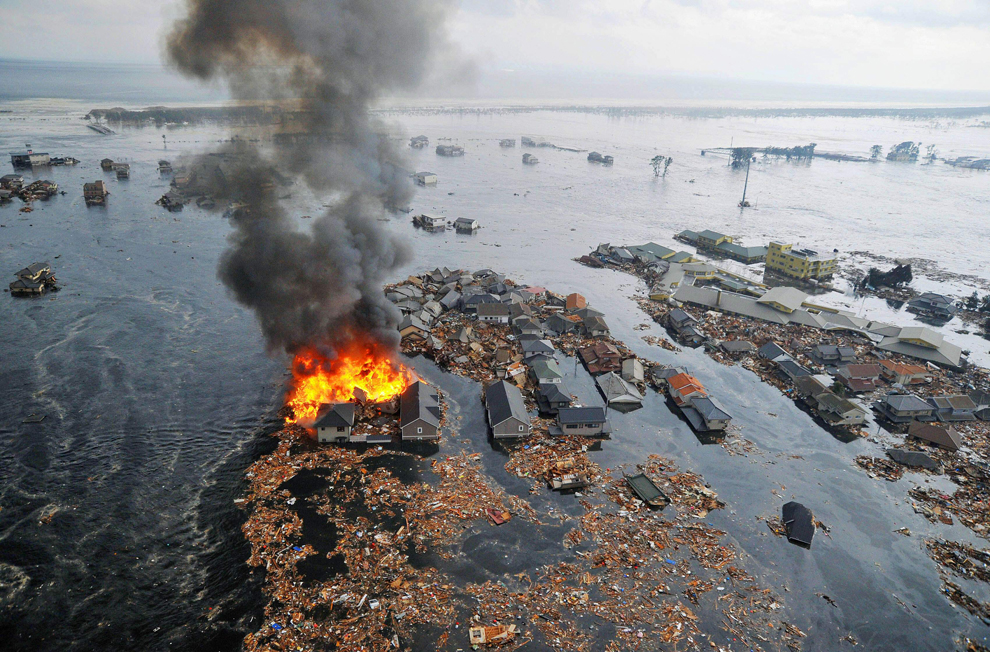
这两天电视里总看到日本海啸后的一幕幕,中午的新闻里,一位母亲哭着讲述了海啸卷上她的房子,她和女儿在三楼,母女俩被卷进了海水里,看着自己的孩子被海水卷走,她哭着说她希望她的女儿现在还活着。祝愿日本早日从灾难中走出来,祝愿我们在日本的朋友们,在日本的快递网友们平安!
让世界充满爱!
| 日本:一个灾难接着另一个灾难
2011/03/13 | |
日本:一个灾难接着另一个灾难
3月13日,日本发生强震和海啸的东北部福岛地区另一座核反应堆发生爆炸,日本政府不排除发生核泄漏事故。已有22人因遭核辐射被送往医院,另有百余人有核辐射症状。德国政府承诺为日本提供一切援助,并召开紧急峰会讨论加强本国核电站安全措施。
3月13日,日本气象厅将周五(3月11日)东北部大地震震级修正为里氏9.0级,这是世界观测史上最高震级。日本电视台NHK援引警方提供的信息说,地震海啸灾难造成的死亡人数将升至1万人,目前震区仍有约2万人失踪,已有约40余万居民被转移到1400多个临时避难场所。
首批核辐射患者入院治疗
继周六(3月12日)被海啸冲击受损的福岛一号核反应堆发生爆炸和核泄漏事故后,3月13日日本传出核泄漏危机进一步扩大的消息。法新社援引东京电力公司一名发言人的消息报道说,福岛一号核电站第三反应堆紧急冷却系统失灵,可能发生爆炸,急需采取冷却措施。瑞士《伯尔尼日报》报道说,22名遭核辐射的病人已被送往医院治疗,另有166人呈现遭核辐射症状。德国《明镜周刊》根据通讯社报道说,福岛核电站另一反应堆周日发生核泄漏事故,反应堆周围的放射性物质测量结果比正常值高出400倍。
日本政府信息政策遭批评
日本政府没有证实相关测量结果,只表示不排除第二座反应堆发生爆炸和核心融毁(meltdown)事故,但承认对事故的具体严重程度还没有足够了解。日本政府对于大地震和核事故的信息政策遭到国内和外国驻日记者的普遍批评,认为东京政府的灾难信息不够及时和透明。日本政府按照国际核事故分级表将此次事故定级为4级,最高级是7级,比如1986年发生的切尔诺贝利核事故。
微博网站推特上,来自日本的大量推文中也存有对政府危机处理工作的不满。日本媒体指责发生泄漏事故的福岛核电站已超期服役。对于事故核电站的运营商东京电力(Tepco)的可信度也存有质疑。该公司过去曾有过试图掩盖核电站事故信息的行为。此次事故后,几位没有及时提供真实信息的公司高层已被撤职。
日本民众镇静自若、文明有序
日本举国上下沉浸在受灾之后的震惊状态。灾区出现食品和饮用水短缺现象,大批临时避难所也已人满为患。但是习惯了地震多发和定期进行灾难演习的日本人整体表现平静乐观。德国电视二台记者在东京采访的感受是,日本人没有陷入恐慌,而是尽量尽快重新恢复正常生活,并积极参与重建。日本灾区人民文明有序地等待打公用电话、上洗手间和排队步行转移安全地带的视频和照片也在网上被广为流传。
德国检查本国核安全状况
国际社会纷纷向日本伸出援手。德国政府表示,愿为伙伴国日本提供一切形式的帮助。默克尔总理周六(3月12日)晚间临时召开紧急会议,与环境、外交和内征部长讨论如何应对日内本可能发生的更严重的核灾难:
"如果在日本这样核电站安全水准极高的国家,核设施都因地震海啸等自然灾害而出现严重安全问题,那么在德国和欧洲以及世界其他同样有极高核安全标准的国家就也可能发生类似灾难。"
德国政府已经决定对本国核电站的安全状况进行全面严格检查。德国外交部长韦斯特韦勒承诺为日本提供一切援助:
"我们不仅向日本人民表达哀悼之情,也提供具体帮助,40多位德国技术援助组织的工作人员已经抵达日本。"
这些工作人员将在日本灾区协助进行搜救工作。德国外长同时补充说,如果日本灾区的形势、特别是受损核电站地区的形势发生变化,会以德国救援人员的人身安全为首要考虑因素,决定是否增派或撤回工作人员。
日本地震灾难引发的核灾难也再次给德国反核能运动的支持者最好的例据。反对党绿党议会党团主席特里亭批评联邦政府延长德国核电站运营期的决定:
"日本目前发生的一切再次证明,世界上没有一座核电站是能百分百防止泄漏事故发生的。这也是为什么2001年红绿政府决定逐步放弃使用核能的原因。"
周六(3月12日),德国斯图加特有上万名反核能运动的支持者上街游行。默克尔总理认为,现在不是讨论德国核电站使用的时间,但是承诺德国会从日本核事故中认真吸取教训。
综合报道:谢菲
德国之声中文网
枪声震全球汉奸汪精卫命丧谁手?
2011/03/12 |
枪声震全球汉奸汪精卫命丧谁手?
1935年中国的历史上曾发生一桩政治巨案,国民党四届六中全会期间,国民党高级官员汪精卫遇刺,身中三枪,险些送命。当时全国各大报纸相继刊登这条特大新闻,举国震惊。
滁州义士刺杀汪精卫
1935年11月,国民党四届六中全会在南京召开。开幕式后,除蒋介石外的全体中委合影。汪精卫坐 在第一排正中,在前排就座的还有林森、张静江、孙科、戴季陶、阎锡山、张学良、张继等人。记者们面对照相者站成半圆形。9点35分,摄影师按下快门,正当 委员们转身陆续走上台阶,准备继续开会时,从记者群中闪出一人,自大衣口袋里掏出手枪,高呼:打倒卖国贼!向站在头排正要转身的汪精卫连发三枪,一弹射进 他左眼外角下颧骨,一弹从后贯通左臂,一弹从后背射进第六、七胸脊柱骨旁。
立在汪精卫身旁的张继迅速奔向袭击者身后,将其拦腰抱住,张学良飞起一脚踢掉手枪,汪的卫士连开2枪,袭击者应声倒地,他就是晨光通讯社记者孙凤鸣。原系十九路军排长,因不满蒋汪政府对日妥协,本要刺杀蒋介石,因蒋没来,转刺汪精卫,孙凤鸣两天后死于医院。
结友共反蒋
孙凤鸣这次“刺汪”有一个周详的计划。据《江淮时报》刊文记载,孙凤鸣又名孙凤海,1905年出生在安徽滁州市天龙池巷内。于1928年被迫离乡背井,到他乡游荡。年底,在江苏安宜结识了华克之。
华克之,男,江苏宝应人,早年肄业南京金陵大学,曾任南京学联理事。第一次国共合作时期,任国民党南京市党部青年部长,是孙中山先生三大政策忠实的力行者。多次遭到国民党特务通缉追捕。
孙凤鸣与华克之相识后,当即在安宜筹划组织抗日反蒋游击队。后被泄露,未成。两人被迫逃走。分手时彼此宣誓,立志抗日反蒋到底。
1929年凤鸣认识了江苏姑娘崔正瑶,不久结为伉俪,又于1930年一道到沪。在上海他俩住了四年,凤鸣认识了王亚樵、余立奎等人,并加入他们组织的“安徽劳工会”,成为该组织的主要成员。
“淞沪抗战”失利,国民党与日本签订了《上海停战协定》。协定公布后,孙凤鸣和华克之等人愤懑不平,时常聚集在上海打浦桥法政学院东边新新南里232号小危楼议论国事,忧国忧民。从此,小危楼便成了“刺汪事件”的策源地。
除蒋行动从何处入手?成为危楼青年的思考主题。他们设想在南京建一通讯社,以这种形式公开捕捉信息,可直入上层社会,接近蒋介石。
华克之回沪,通过熟人,上下疏通,很顺利地办妥了通讯社的立案手续。批准立案的时间是1934年11月。登记表上注册社长胡云卿(华克之),总务主任兼编辑主任张玉华,采访部主任贺坡光,记者孙凤鸣。
同年12月,国民党召开四届五中全会,孙凤鸣前往中央党部会场,但未能找到行刺的机会。1935年8月,蒋介石自武汉抵南京,途中车速较快,孙凤鸣难于下手。两次图刺,均未得手。
10月,适逢国民党召开四届六中全会,大好时机,不可错过。华克之等人便加紧进行筹划。孙凤鸣早已下了牺牲的决心,并托华克之将妻子崔正瑶送往香港。
枪声震全球
孙凤鸣被击倒以后,卫兵在他身上搜出几枚毫洋大角,和作为自杀剩下的一枚鸦片烟炮,说明他立誓死不求生的决心。孙凤鸣被击中要害,流血过多,送医院后濒临死亡。医生奉命每小时注射强心针十余次,因此在尸检时竟发现身上针孔一百几十处之多。
第二天凌晨,孙凤鸣平静地离开了人间,后埋葬在紫金山附近。直到现在,墓、碑俱存。
事后,国民党立法委员楼桐荪,在法官讲习所称赞孙凤鸣是当代的爱国志士。冯玉祥将军于1939年元旦,在国民党中央委员团拜会上曾说:“滁州姓孙的(指孙凤鸣)那青年,有先见之明,我们把人家(指晨光通讯社成员及家属)弄死的弄死,下监的下监,我们又把汪精卫弄成国民党副总裁;如今汪精卫飞跑了,要到南京去组织汉奸政府。这样看来,姓孙的青年真可佩服,我们应该为姓孙的铸一尊铜像,来纪念他”。 | | 大图:日本地震! Massive earthquake hits Japan
An 8.9-magnitude earthquake hit off the east coast of Japan early today. The quake -- one of the largest in recorded history -- triggered a 23-foot tsunami that battered Japan's coast, killing hundreds and sweeping away cars, homes, buildings, and boats. Editors note: we'll post more as the story develops -- Lloyd Young ( 47 photos total)
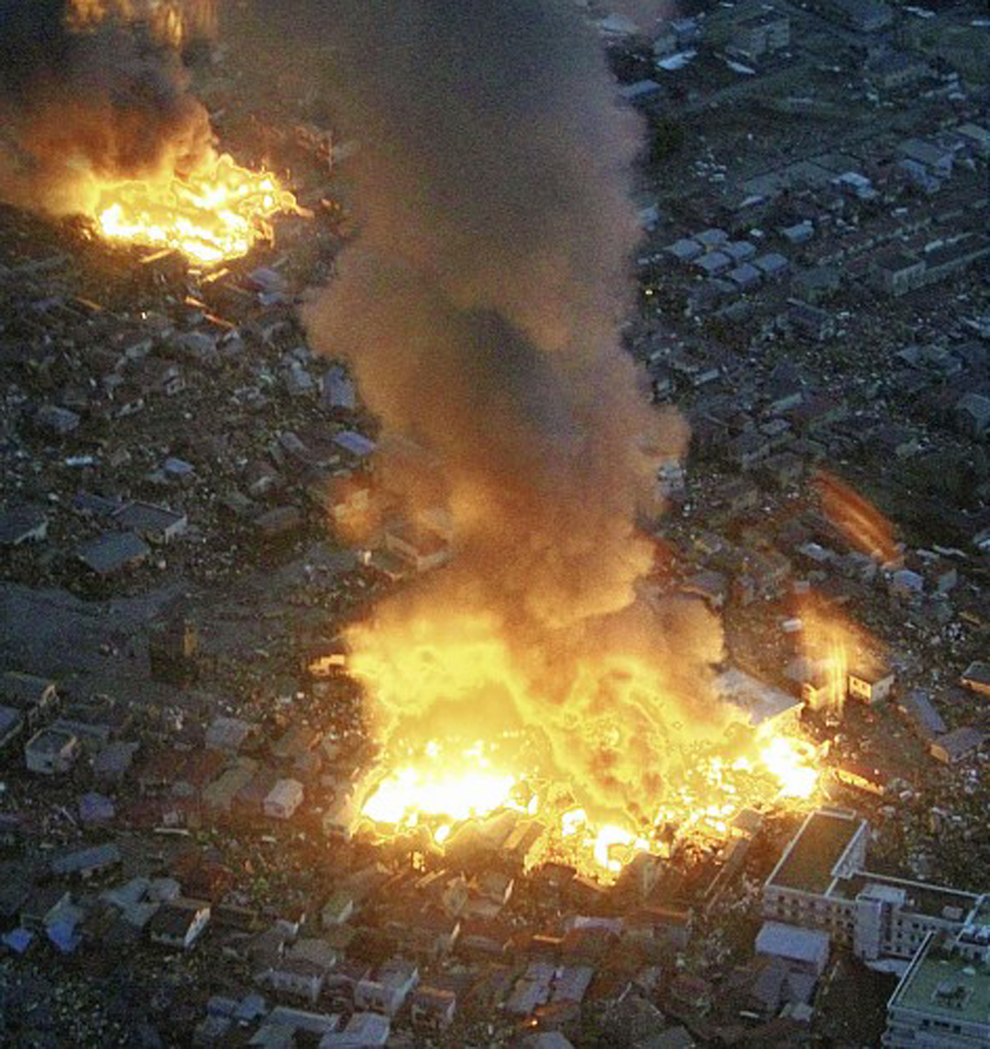
 Houses swallowed by tsunami waves burn in Natori, Miyagi Prefecture (state) after Japan was struck by a strong earthquake off its northeastern coast Friday, March 11. (Kyodo News/Associated Press)
 A tsumani triggered by a powerful earthquake makes its way to sweep part of Sendai airport in northern Japan on Friday March 11, 2011. The magnitude 8.9 earthquake slammed Japan's eastern coast Friday, unleashing a 13-foot (4-meter) tsunami that swept boats, cars, buildings and tons of debris miles inland. (Kyodo News/Associated Press) #
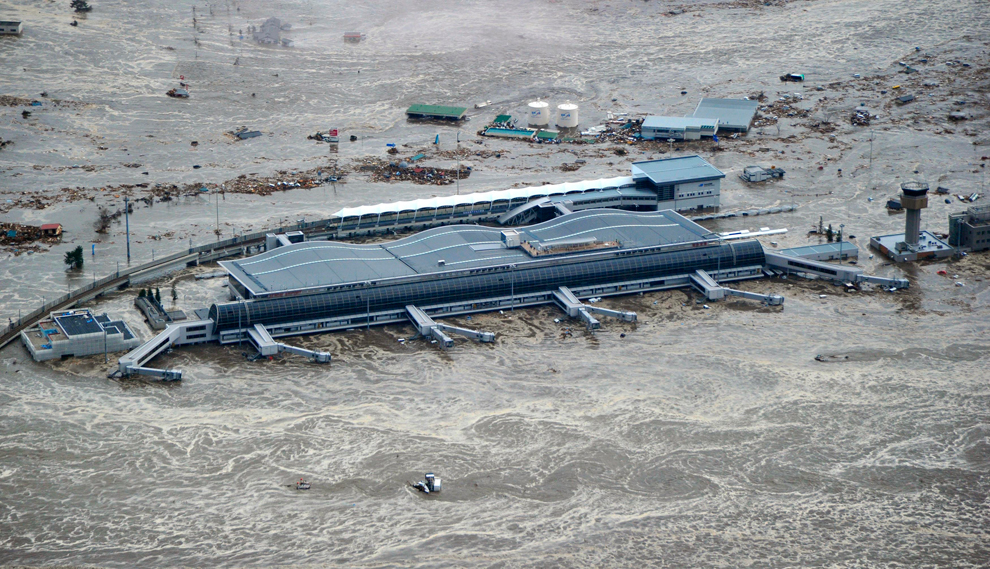 Sendai Airport is surrounded by waters in Miyagi prefecture (state), Japan, after a ferocious tsunami spawned by one of the largest earthquakes ever recorded slammed Japan's eastern coast Friday, March 11, 2011. (Kyodo News/Associated Press) #
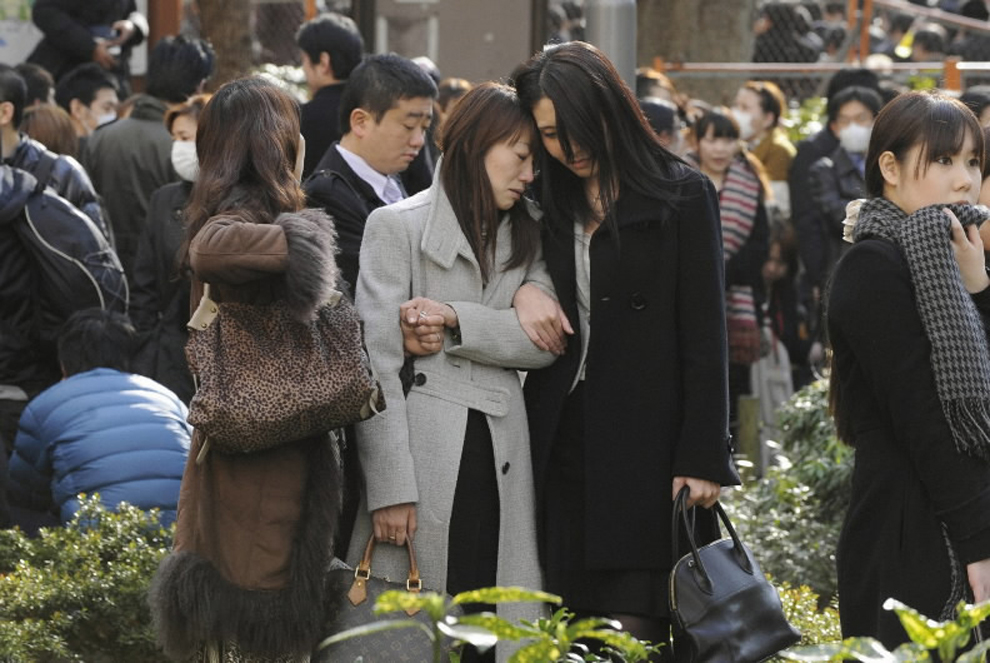 Evacuees stand around Shinjuku Central Park in Tokyo Japan March 11, 2011. A massive 8.9 magnitude quake hit northeast Japan on Friday, causing many injuries, fires and a ten-metre (33-ft) tsunami along parts of the country's coastline. A tsunami warning has been issued for the entire Pacific basin except for the mainland United States and Canada following a huge earthquake that hit Japan on Friday, the Pacific (Reuters) #
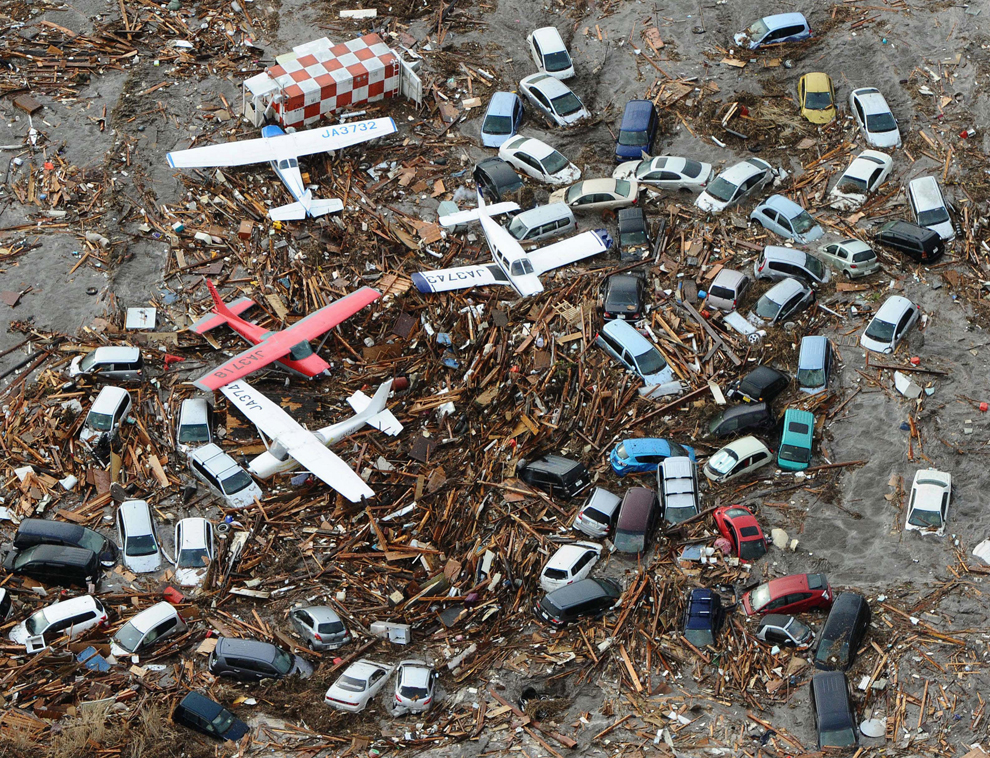 Light planes and vehicles sit among the debris after they were swept by a tsumani that struck Sendai airport in northern Japan. (Kyodo News/Associated Press) #
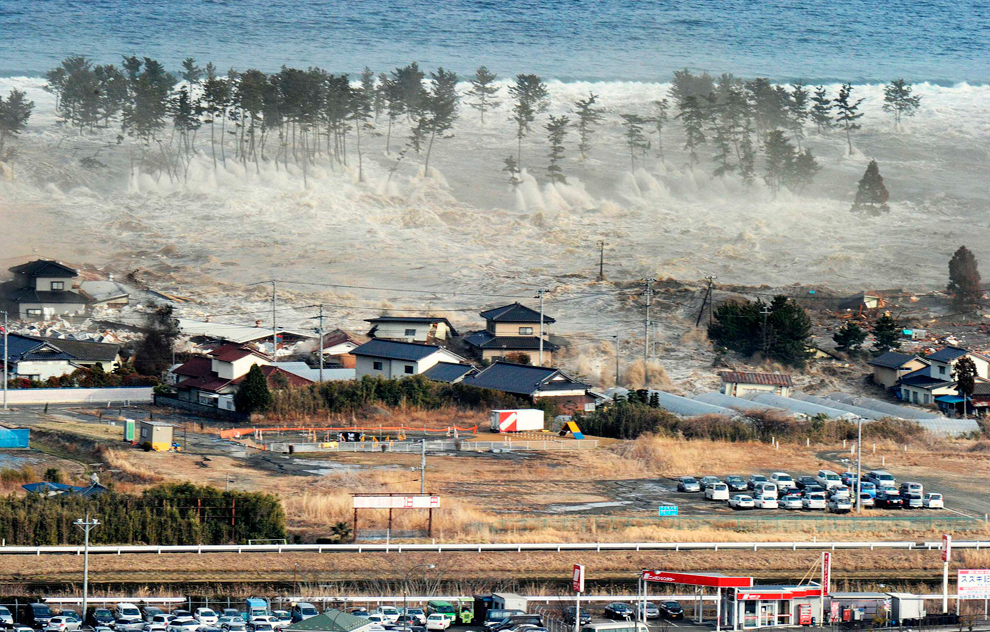 Houses are swept by a tsunami in Natori City in northeastern Japan March 11, 2011. A massive 8.9 magnitude quake hit northeast Japan on Friday, causing many injuries, fires and a ten-metre (33-ft) tsunami along parts of the country's coastline. There were several strong aftershocks and a warning of a 10-metre tsunami following the quake, which also caused buildings to shake violently in the capital Tokyo. (Reuters) #
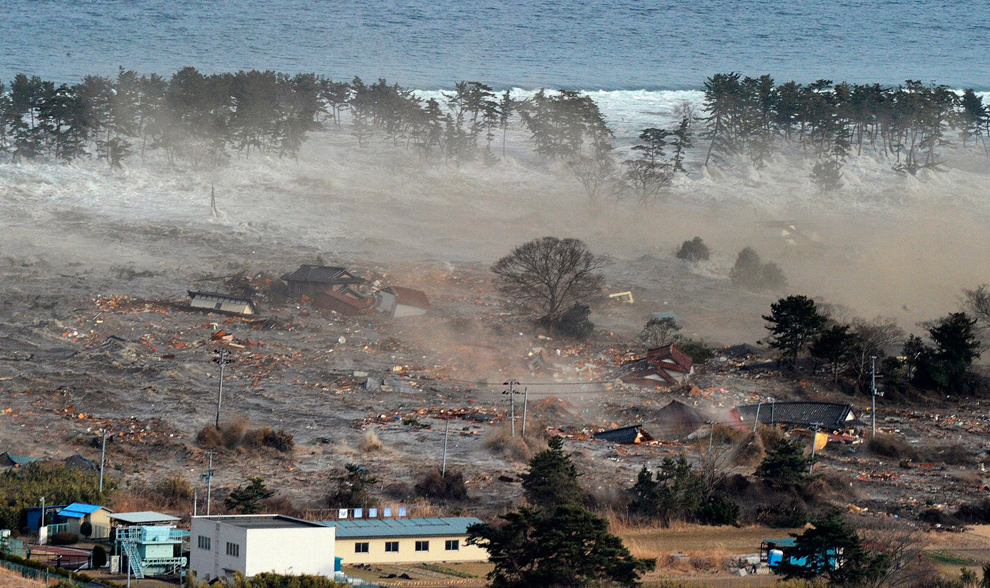 A massive tsunami sweeps in to engulf a residential area after a powerful earthquake in Natori, Miyagi Prefecture in northeastern Japan. (Reuters) #
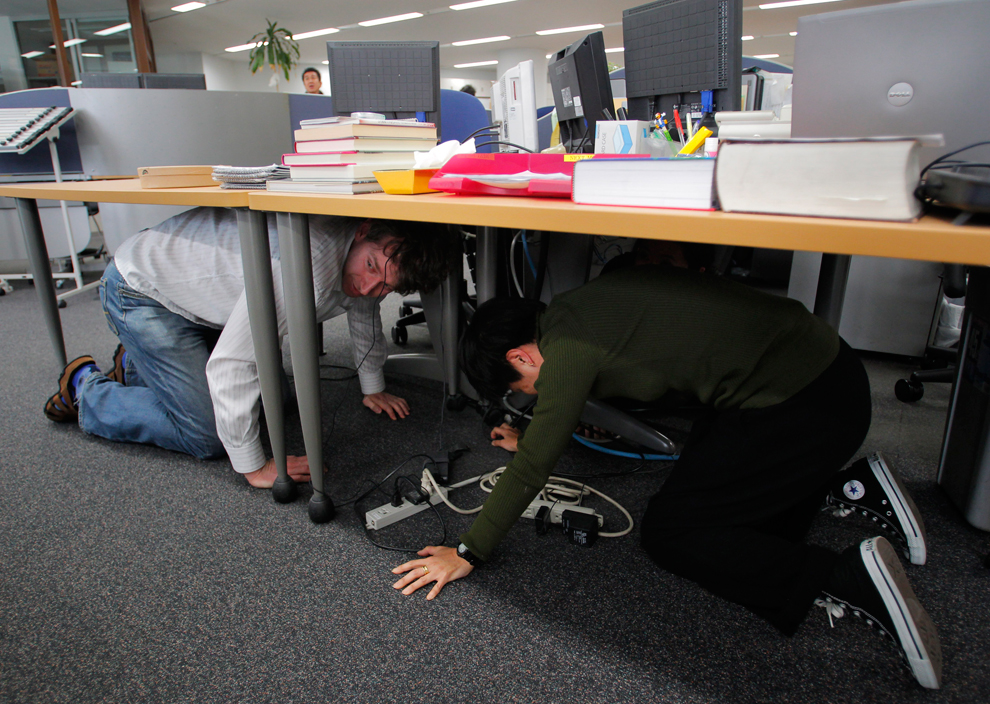 Reporters at the Associated Press Tokyo Bureau in Tokyo take shelter under a table while a strong earthquake strikes eastern Japan. (Itsuo Inouye/Assoctiated Press) #
 People take shelter as a ceiling collapses in a bookstore during an earthquake in Sendai, northeastern Japan March 11. (Reuters) #
 Tsunami swirls near a port in Oarai, Ibaraki Prefecture (state) after Japan was struck by a strong earthquake off its northeastern coast Friday, March 11. (Kyodo News/Associated Press) #
 Seismologists pose for the media as they display a seismographic graph showing the magnitude of the earthquake in Japan, on a monitor at the British Geological Survey office in Edinburgh, Scotland March 11, 2011. The biggest earthquake on record to hit Japan struck the northeast coast on Friday, triggering a 10-metre tsunami that swept away everything in its path, including houses, ships, cars and farm buildings. (David Moir/Reuters) #
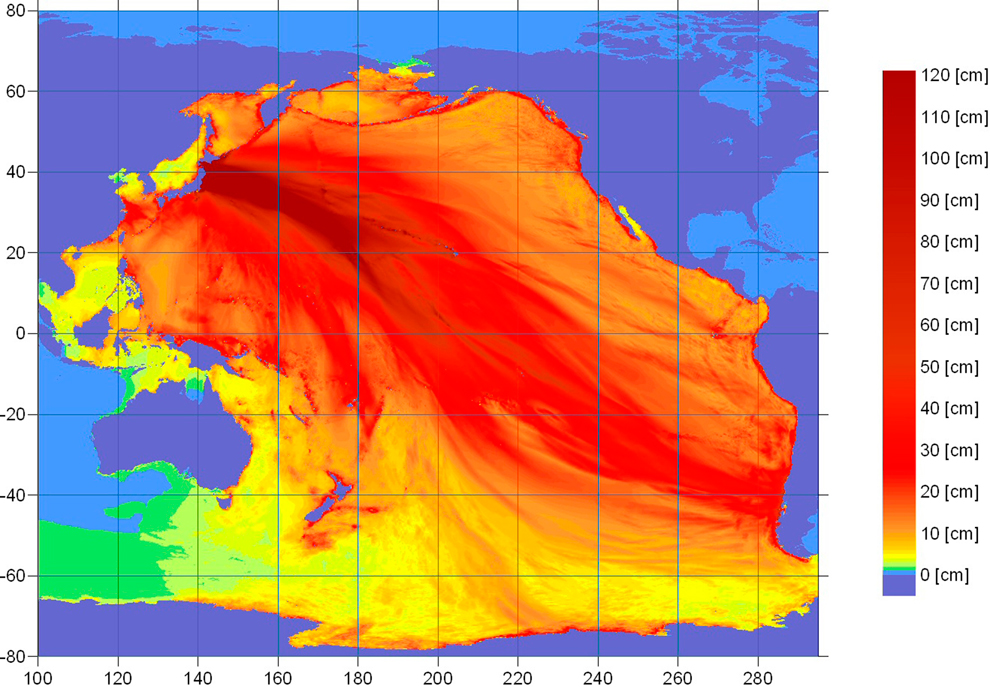 An energy map provided by the National Oceanic and Atmospheric Administration (NOAA) shows the intensity of the tsunami caused by the magnitude 8.9 earthquake which struck Japan on March 11, 2011. A tsunami warning has been issued for the entire Pacific basin except mainland United States and Canada following a huge earthquake that hit Japan on Friday, the U.S. Pacific Tsunami Warning Center said. The warning includes Hawaii and extends from Mexico down to South American countries on the Pacific, the center said. (NOAA/Tsunami Warning Center/) #
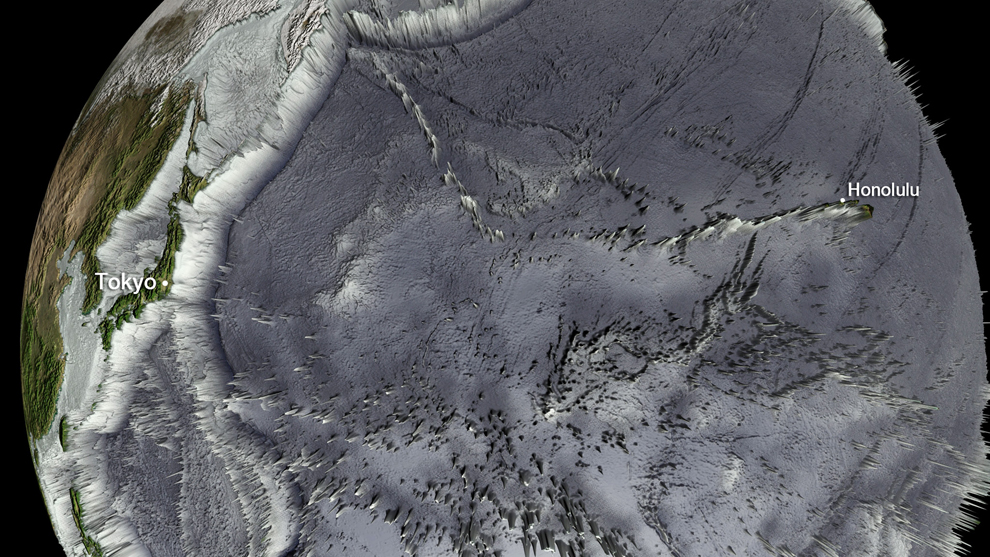 This National Oceanic and Atmospheric Administration (NOAA) Global bathymetry map image released on March 11, 2011 shows features of the ocean floor depth (or bathymetry) from a NOAA ETOPO-1 dataset. The image shows the entire Western Pacific basin. Notice how abruptly the Japanese islands rise out of the ocean. Other coastal Asian areas have much more gradual slopes. The islands and mountain ranges throughout the ocean, visible in this imagery, also affect the tsunami travel time and speed. In the open ocean, tsunamis can travel at speeds up to 500 mph (800 kph). This momentum is what creates such a destructive force as the wave moves inland. Tsunami waves rolled thousands of miles across the Pacific Ocean after a massive earthquake off Japan and washed ashore in Hawaii early March 11, 2011, but the tourist hotspot appeared to escape major damage. As sirens blared and Hawaiian authorities rapidly evacuated low-lying areas, the Pacific Tsunami Warning Center reported wave changes at Waianae Harbor at around 3:24 a.m. (NOAA/handout) #
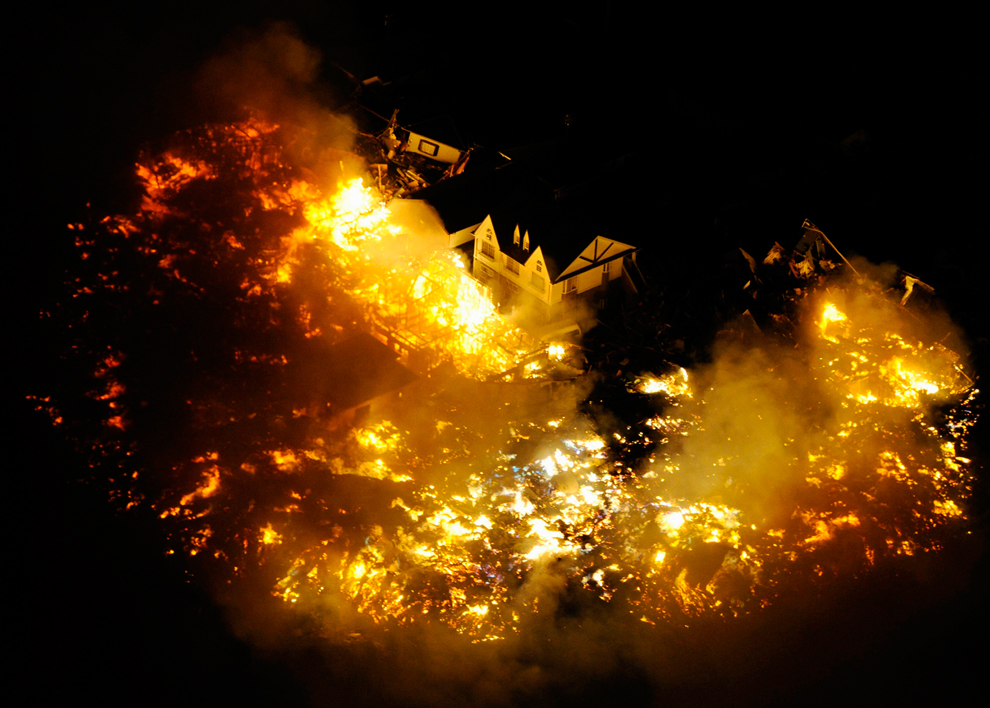 A building is in flames near Sendai airport, Miyagi prefecture (state), Japan, after a powerful earthquake, the largest in Japan's recorded history, slammed the eastern coasts Friday, March 11. (Kyodo News/Associated Press) #
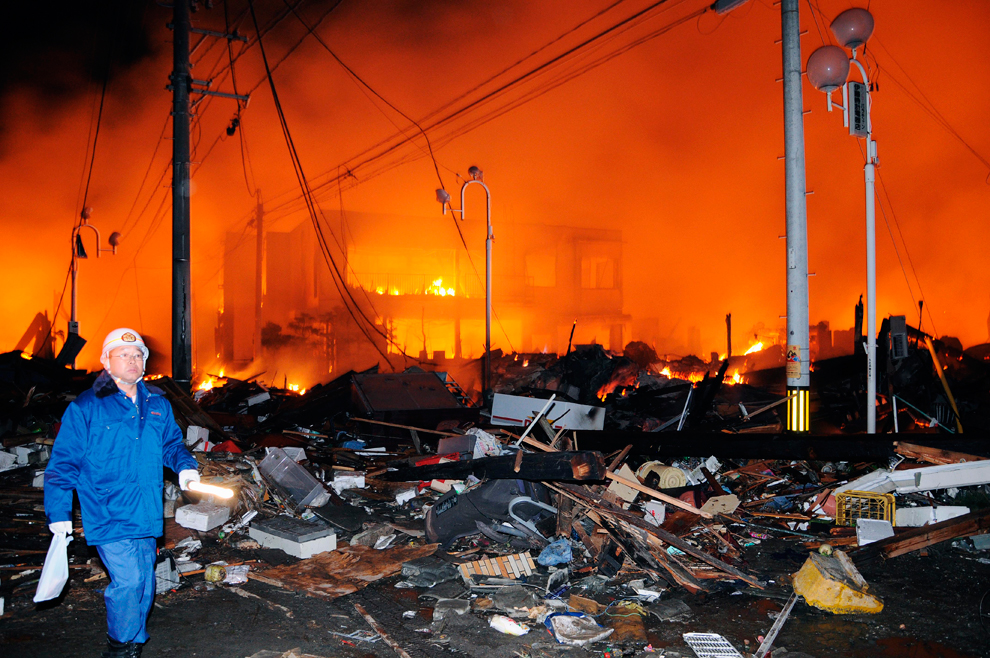 A helmeted man walks past the rubbles and a burning building after a powerful earthquake, the largest in Japan's recorded history, slammed the eastern coasts in Iwaki city, Fukushima prefecture, Japan. (Kyodo News/Associated Press) #
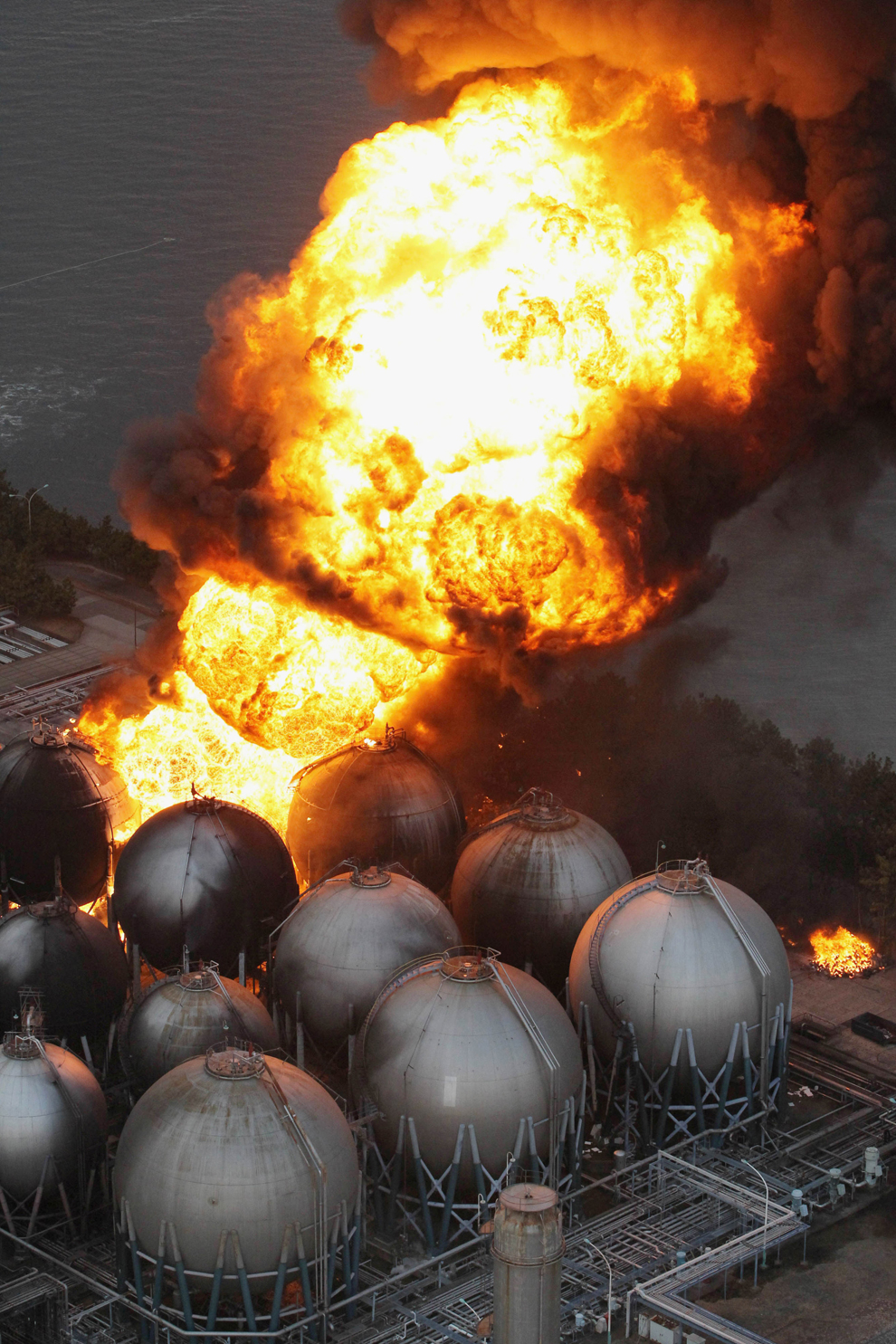 Giant fireballs rise from a burning oil refinery in Ichihara, Chiba Prefecture (state) after Japan was struck by a strong earthquake off its northeastern coast. (Kyodo News/Associated Press) #
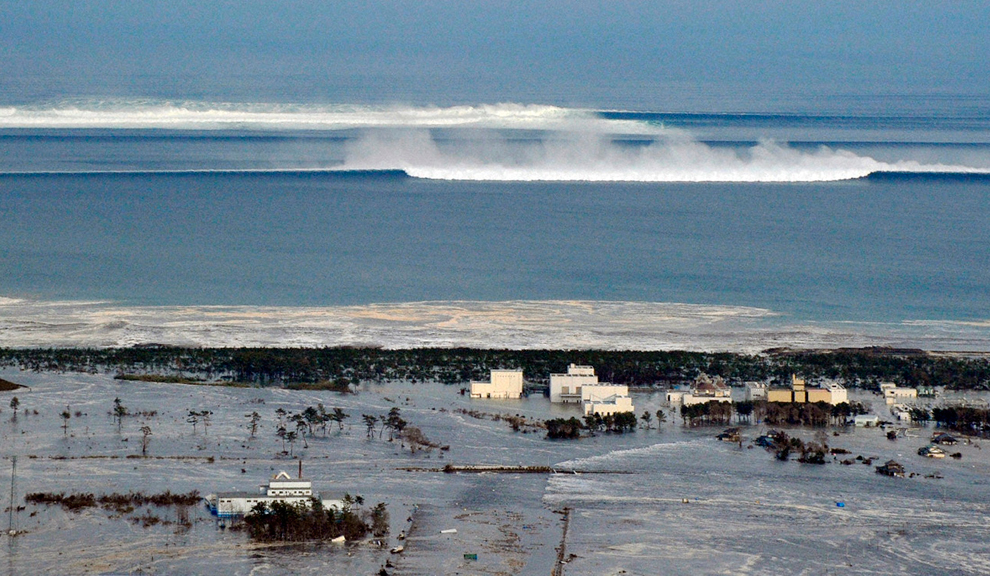 An oncoming tsunami strikes the coast in Natori City, Miyagi Prefecture, northeastern Japan March 11, 2011. The biggest earthquake to hit Japan in 140 years struck the northeast coast on Friday, triggering a 10-metre tsunami that swept away everything in its path, including houses, cars and farm buildings on fire. (Reuters) #
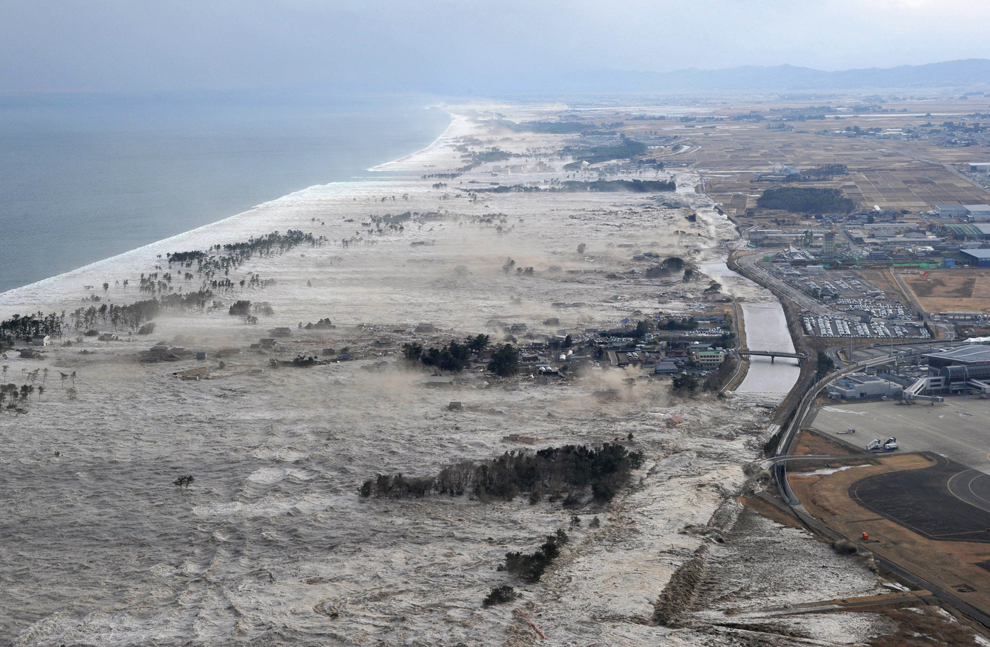 Earthquake-triggered tsumanis sweep shores along Iwanuma in northern Japan. (Kyodo News/Associated Press) #
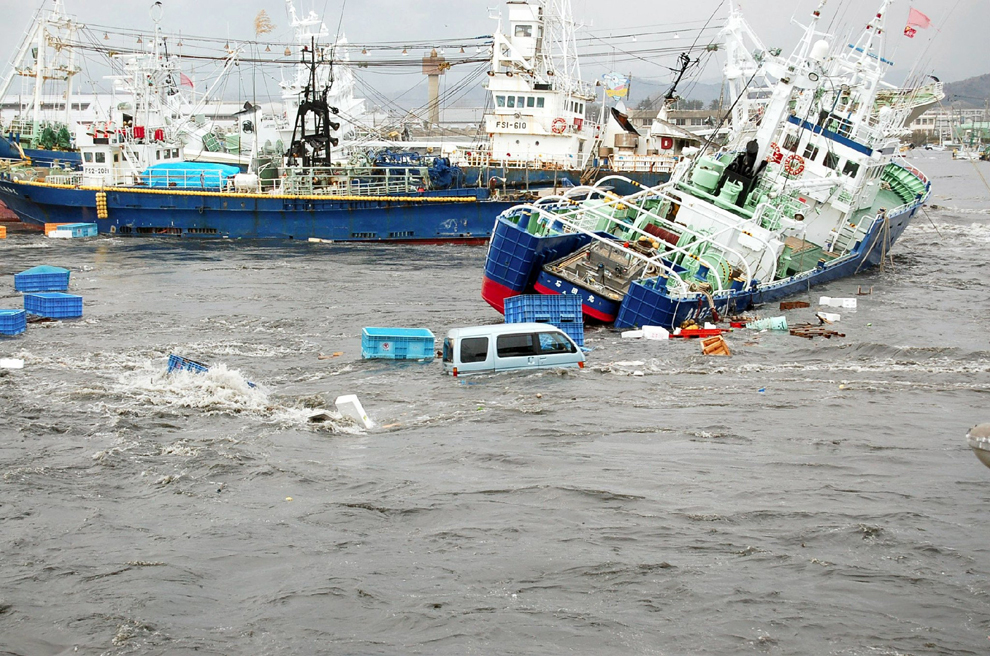 Fishing boats and vehicles are carried by a tsunami wave at Onahama port in Iwaki city, in Fukushima prefecture, northern Japan. (Fukushima Minpo/AFP/Getty Images) #
 A tsunami, tidal wave smashes vehicles and houses at Kesennuma city in Miyagi prefecture, northern Japan. (AFP/Getty Images) #
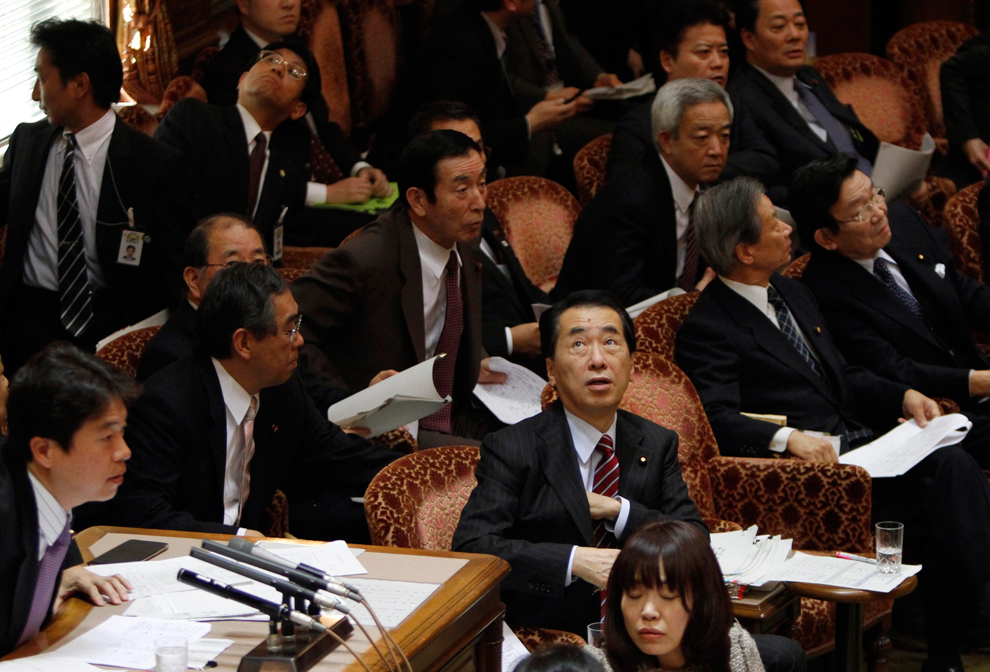 Japan's Prime Minister Naoto Kan (center) reacts he he feels an earthquake as he attends a committee meeting in the upper house of parliament in Tokyo March 11. A massive 8.8 magnitude quake hit the northeast coast of Japan on Friday, shaking buildings in the capital Tokyo, causing "many injuries", at least one fire and triggering a four-metre (13-ft) tsunami, NHK television and witnesses reported. (Toro Hanai/Reuters) #
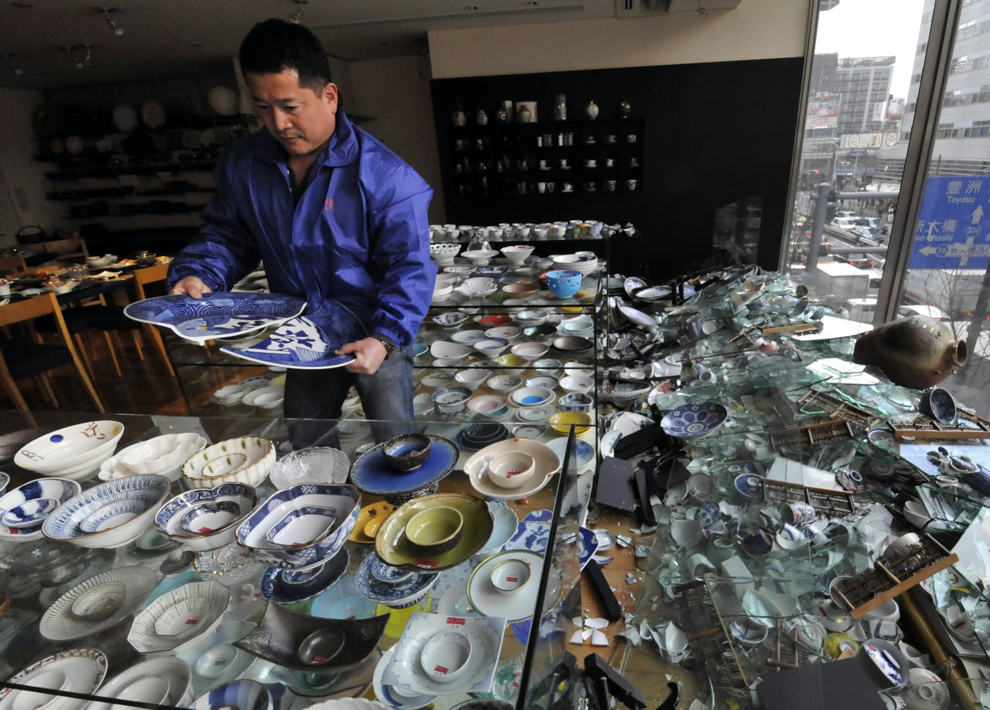 The owner of a ceramic shop checks his damaged wares following the massive 8.9-magnitude earthquake in Tokyo. (Yoshikazu Tsuno AFP/Getty Images) #
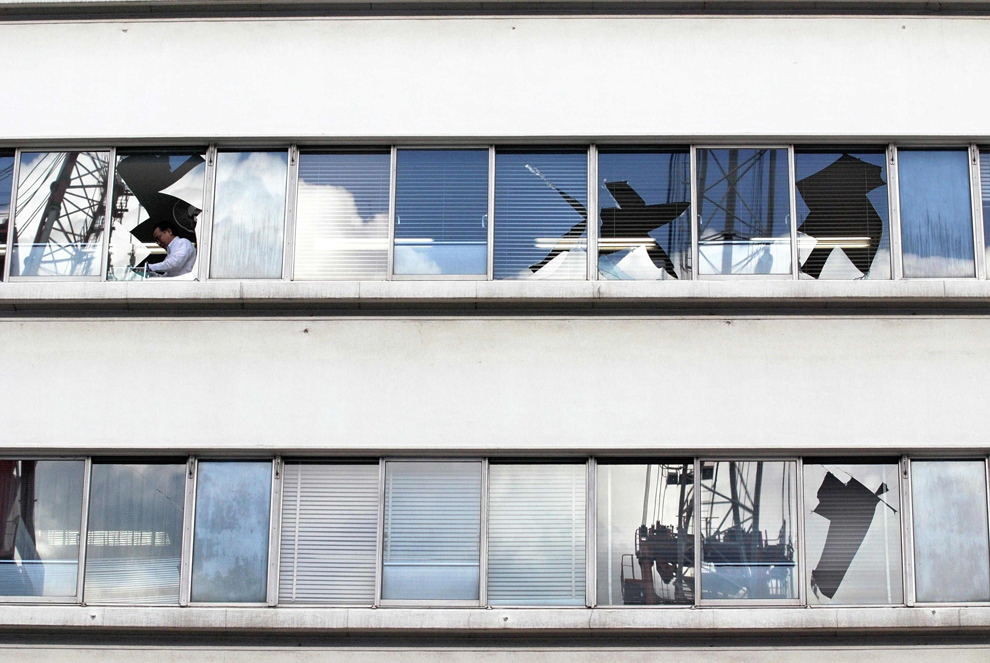 Broken windows of a building are seen after an earthquake in Tokyo , March 11, 2011. A massive 8.9 magnitude quake hit northeast Japan on Friday, causing many injuries, fires and a ten-metre (33-ft) tsunami along parts of the country's coastline. (Reuters) #
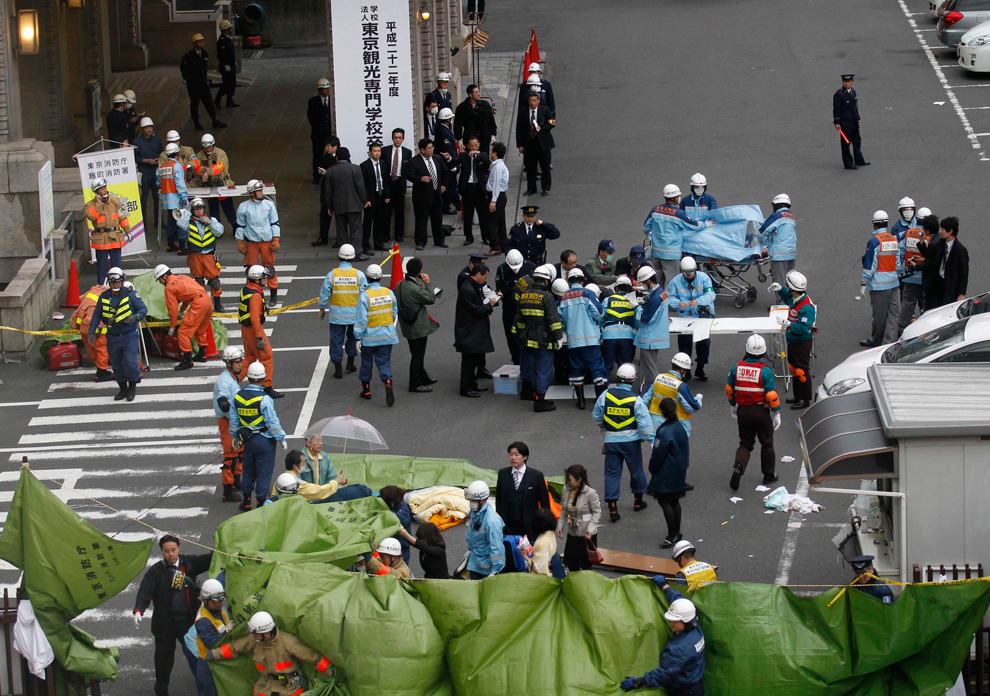 Rescue workers hurry to a building following reports of injuries in Tokyo's financial district after an earthquake hit off the coast of northern Japan. There were several strong aftershocks and a warning of a 10-metre tsunami following the quake, which also caused buildings to shake violently in the capital Tokyo. (Kim Kyung-Hoon/Reuters) #
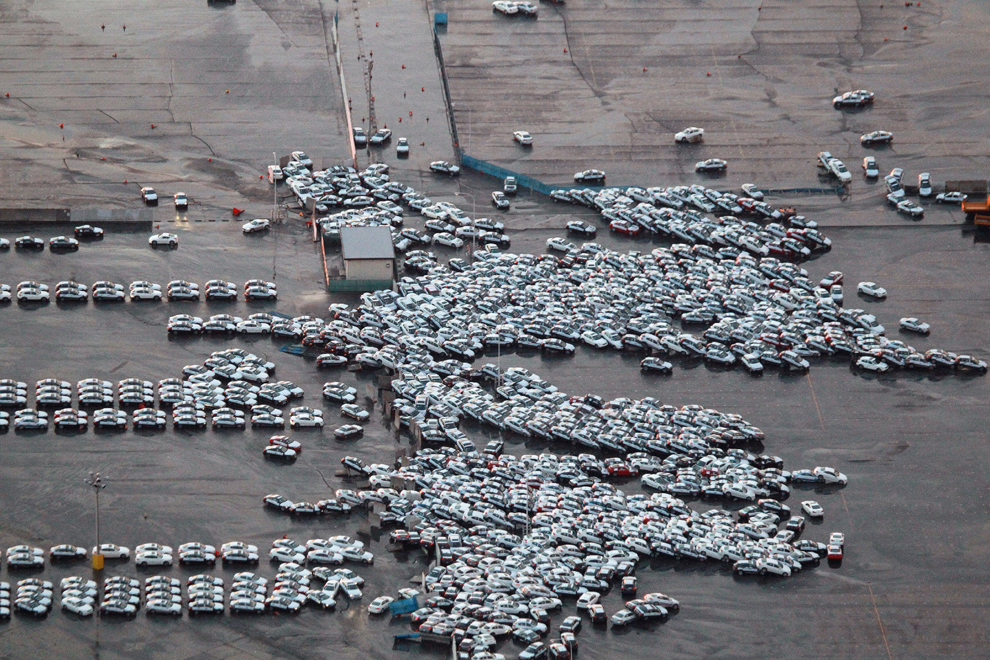 An aerial shot shows vehicles ready for shipping being carried by a tsunami tidal wave at Hitachinaka city in Ibaraki prefecture on March 11, 2011. A massive 8.8-magnitude earthquake shook Japan, unleashing a powerful tsunami that sent ships crashing into the shore and carried cars through the streets of coastal towns. (AFP/Getty Images) #
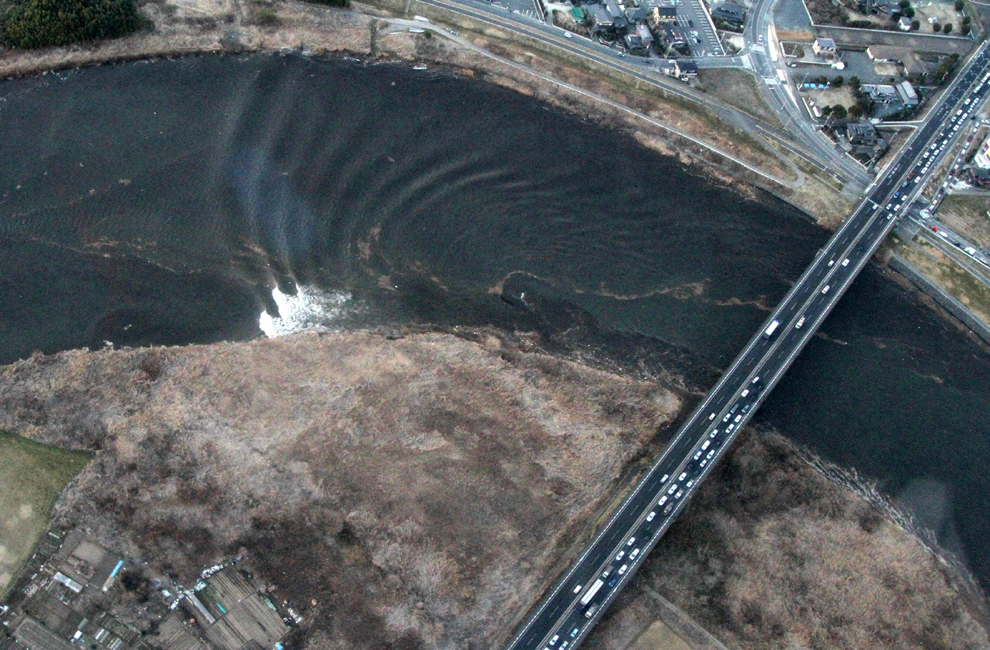 This aerial shot shows the tsunami tidal waves moving upstream (left side) in the Naka river at Hitachinaka city in Ibaraki prefecture on March 11. (AFP/Getty Images) #
 Houses, cars and other debris are washed away by tsunami tidal waves in Kesennuma in Miyagi Prefecture, northern Japan, after strong earthquakes hit the area Friday, March 11. (Keichi Nakane/Associated Press/The Yomiuri Shimbun) #
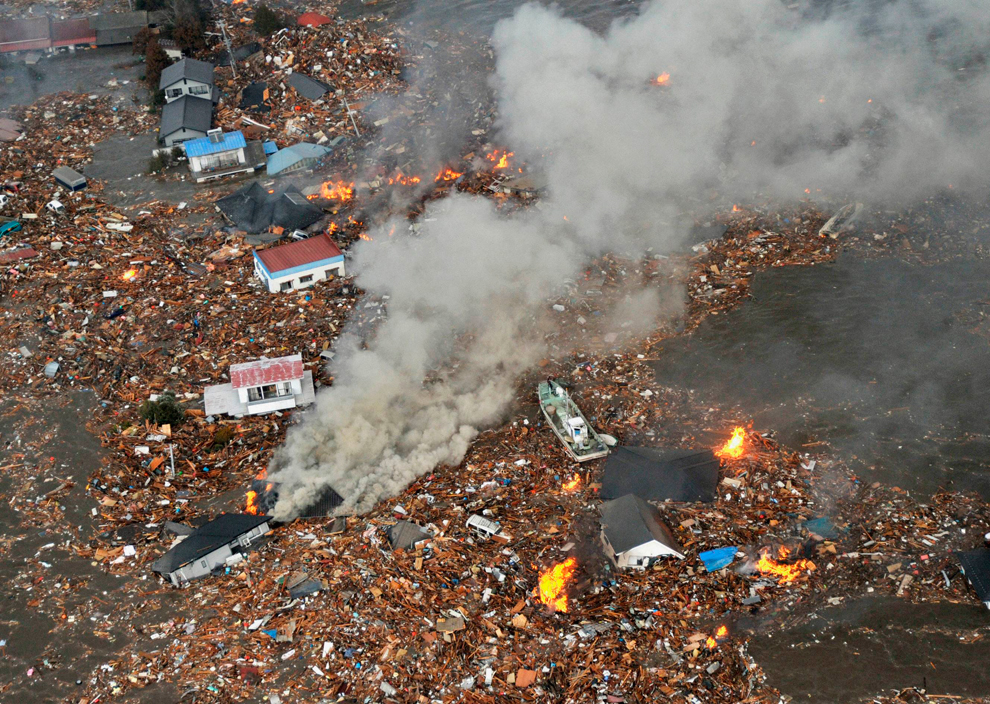 Houses swept by a tsunami smoulder near Sendai Airport. (Reuters) #
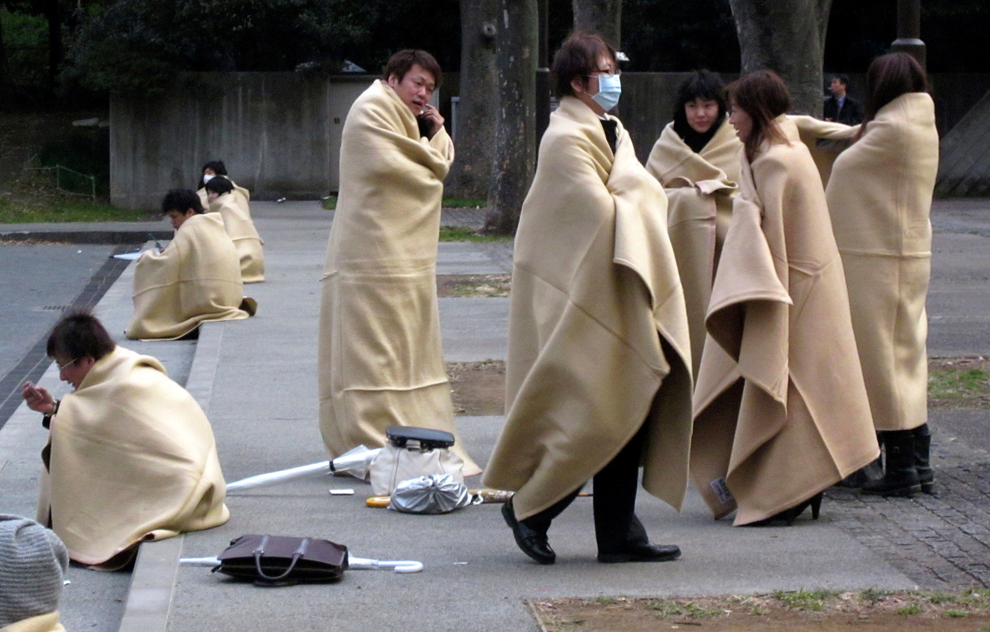 Stranded commuters wrap themselves in blankets bracing for chilly evening at a park in Yokohama, near Tokyo, following a strong earthquake hit eastern Japan on Friday, March 11. (Shuji Kajiyama/Associated Press) #
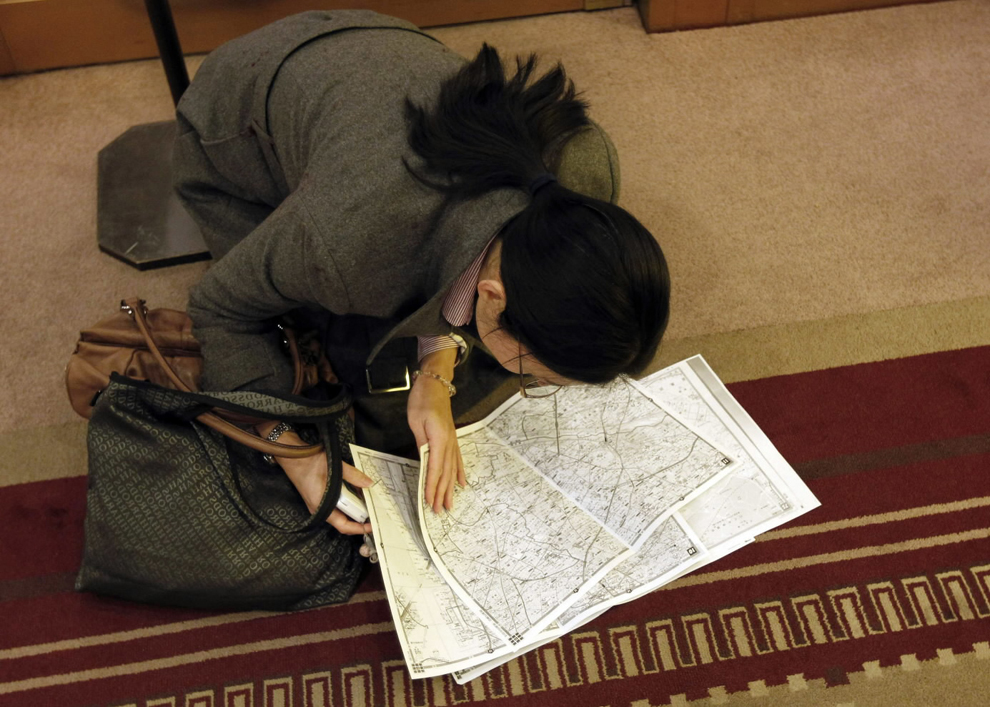 A woman checks a map to find a route as she takes a rest at a hotel lobby after subway and train services were suspended after an earthquake, in Tokyo. (Kim Kyung-Hoon/Reuters) #
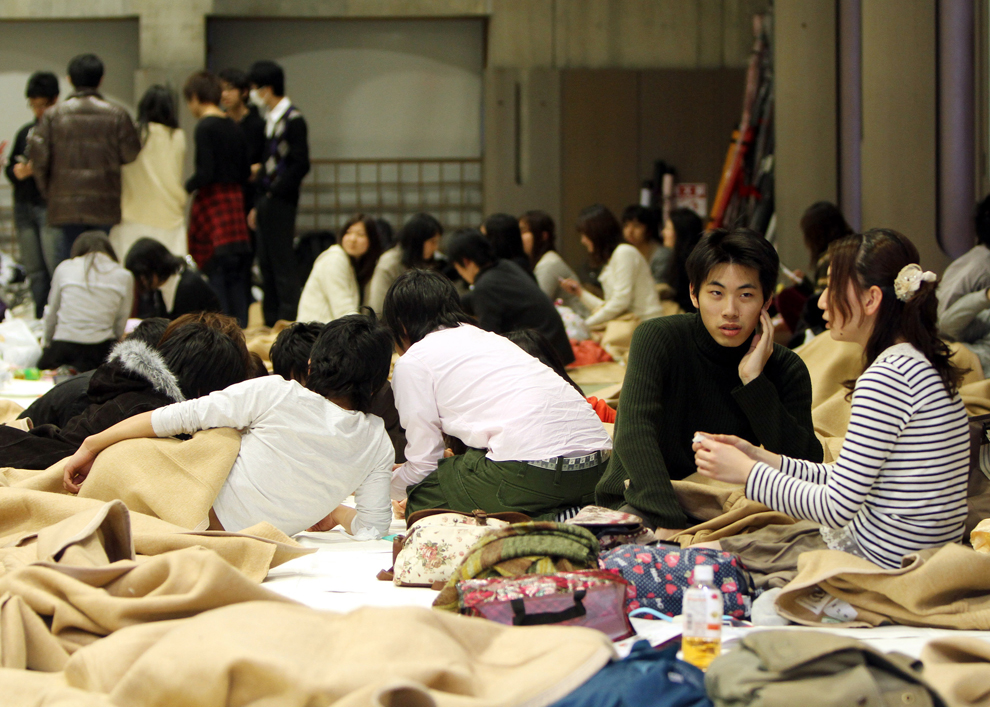 Evacuees wait in an evacuation area following an earthquake in Tokyo, Japan, on Friday, March 11, 2011. Japan was struck by its strongest earthquake on record, an 8.9-magnitude temblor that shook buildings across Tokyo and unleashed a seven-meter-high tsunami that killed hundreds as it engulfed towns on the northern coast. (Haruyoshi Yamaguchi/Bloomberg) #
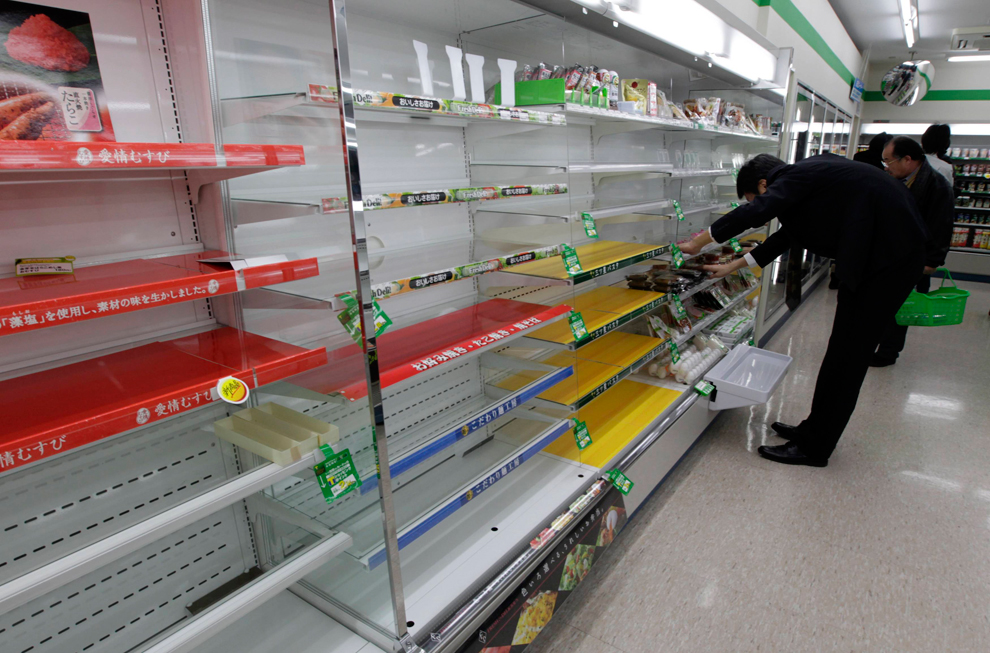 A man looks for supplies in a store in Tokyo that has almost sold out of food and drink as people are unable to return home after an earthquake March 11. (Yuriko Nakao/Reuters) #
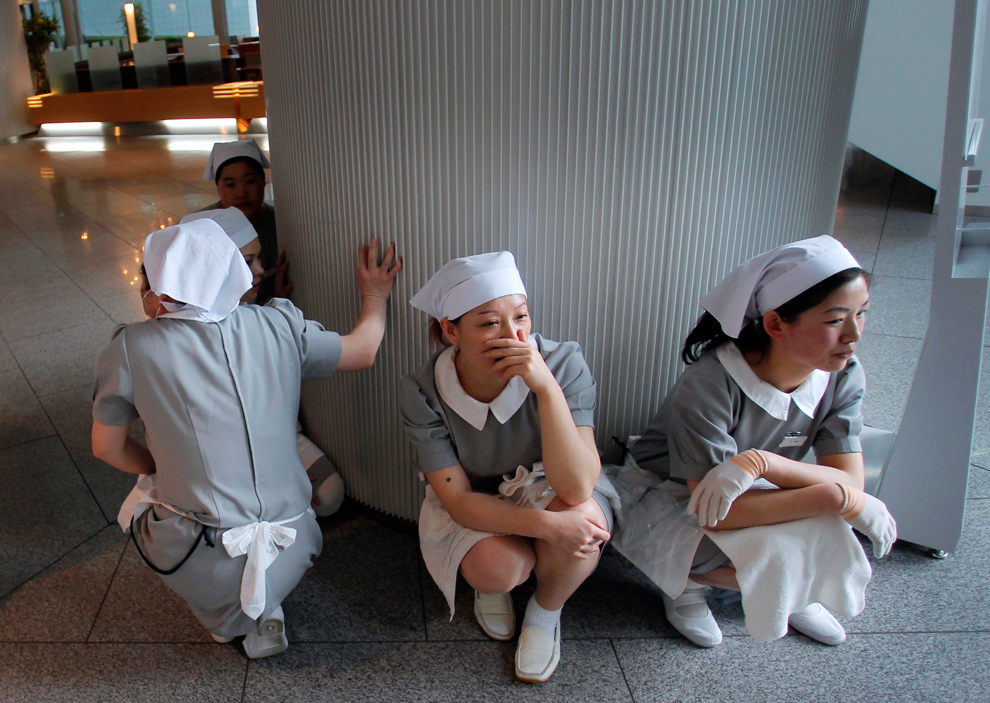 Hotel employees squat down in horror at the hotel's entrance in Tokyo after a strong earthquake hit Japan. (Itsuo Inouye/Associated Press) #
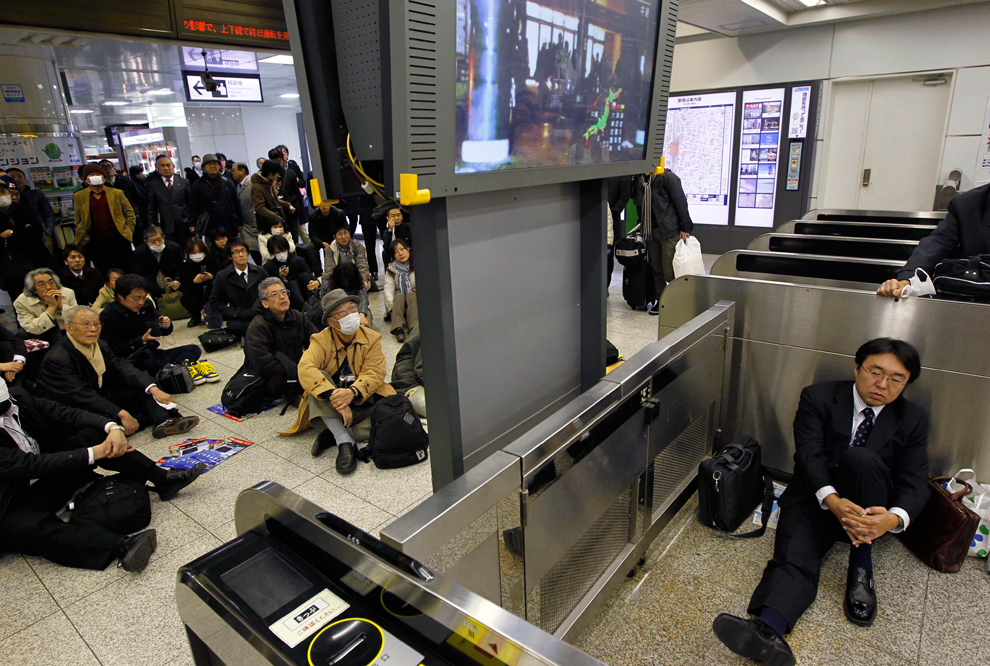 Stranded commuters watch a TV news on a powerful earthquake at Tokyo railway station as train services are suspended in Tokyo. (Hiro Komae/Associated Press) #
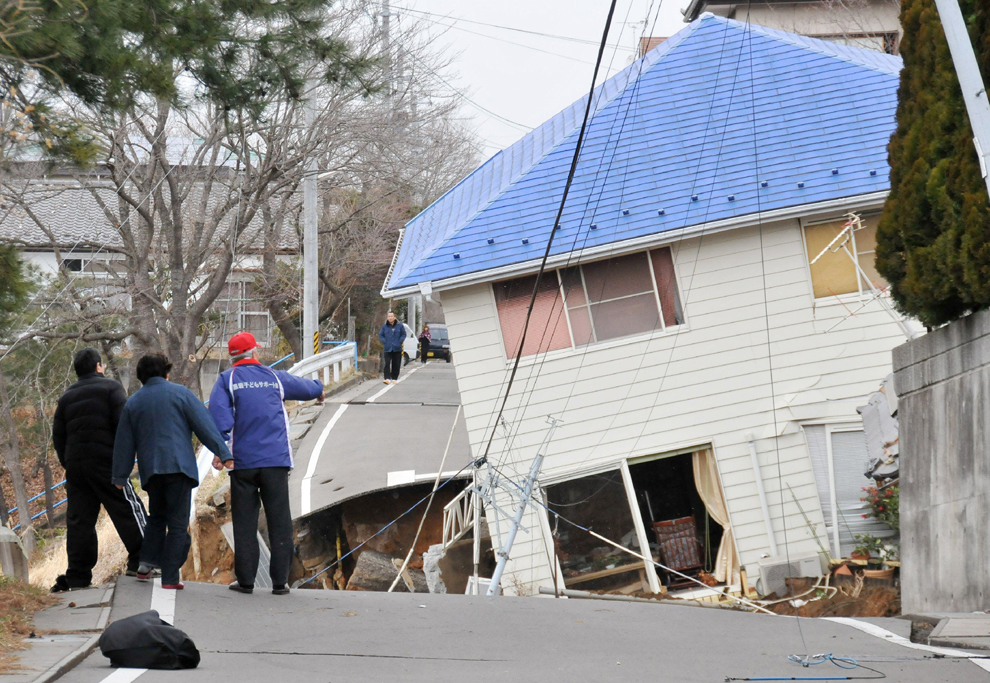 Residents check the damage done on a road and house in Sukagawa city, Fukushima prefecture, in northern Japan. (Fukushima Minpo/AFP/Getty Images) #
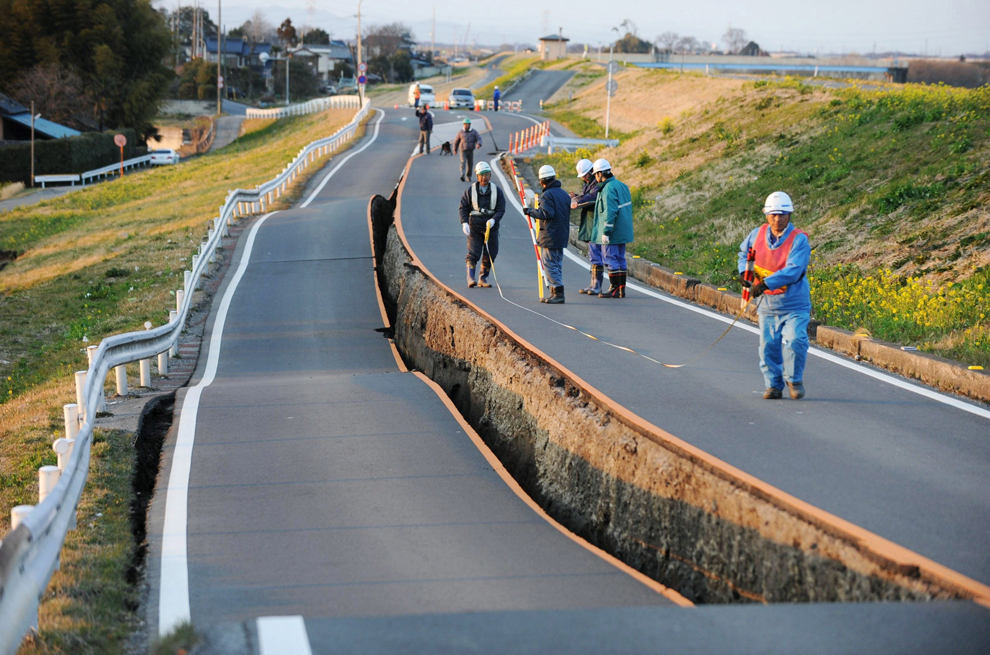 Workers inspect a caved-in section of a prefectural road in Satte, Saitama Prefecture, after one of the largest earthquakes ever recorded in Japan slammed its eastern coast March 11. (Saitama Shimbun/Associated Press/Kyodo News) #
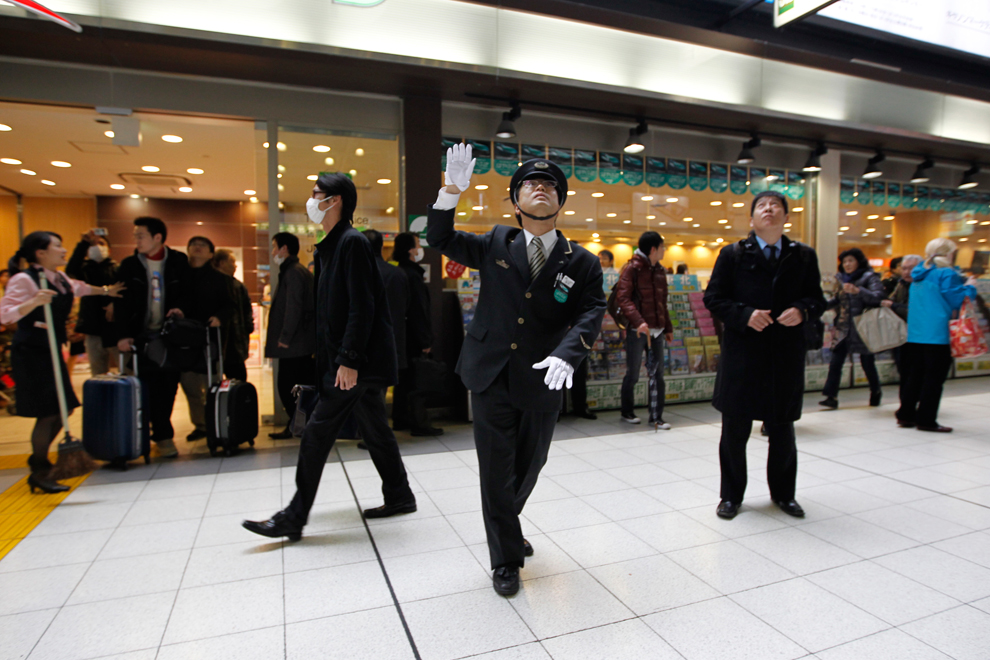 A station staff directs passengers at Tokyo's Shinagawa train station after a magnitude 8.9 earthquake slammed Japan's eastern coast. (Hiro Komae/Associated Press) #
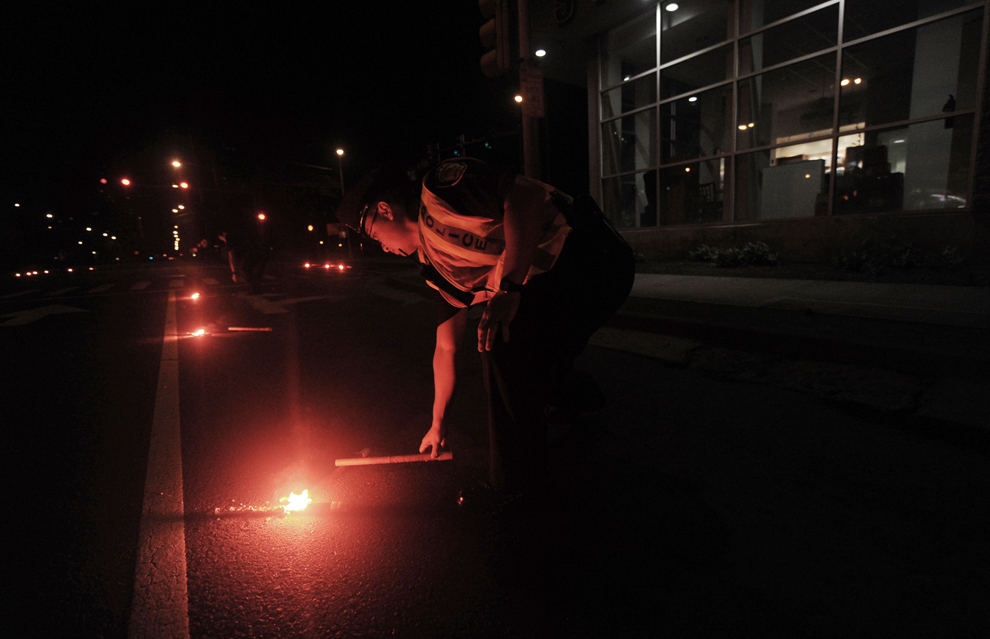 Police place roadside flares along the highway on March 11 in Honolulu, Hawaii. An earthquake measuring 8.9 on the Richter scale has hit the northeast coast of Japan causing tsunami alerts throughout the Pacific Ocean. Thousands along the coast are evacuating their homes in Hawaii as the state prepares for tsunami waves. (Lucy Pemoni/Getty Images) #
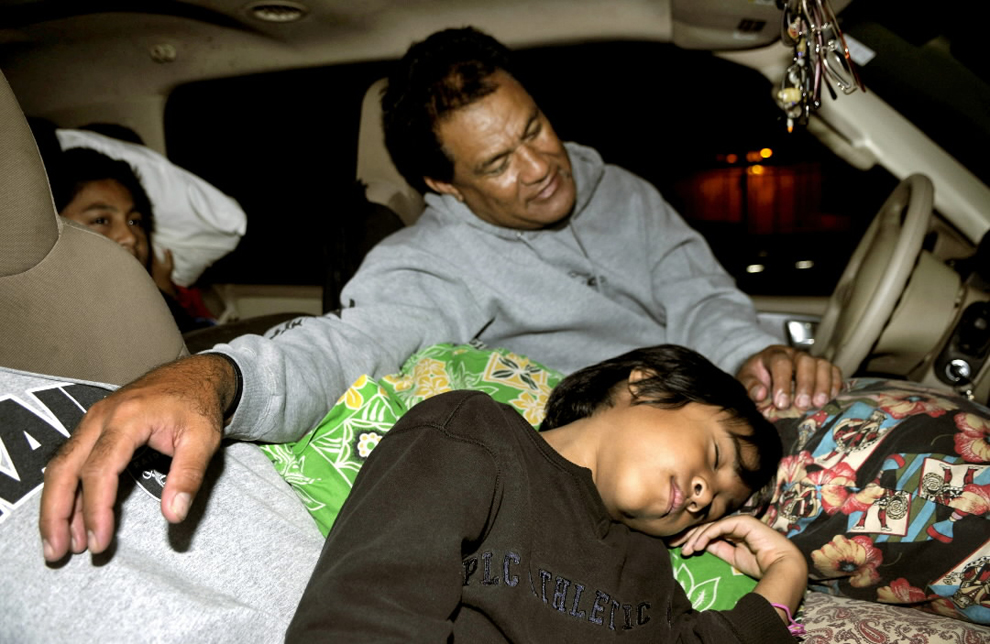 Puipui Faletoi, of Moiliili, Oahu, background center, rests in his vehicle with his sons Daniel, left, and Fletcher Faletoi in the parking lot of Manoa District Park in Oahu, Hawaii. The site is a volunteer staging area which could turn into a Red Cross shelter if a tsunami arrives. The Faletoi family plan to take shelter here. (Rebecca Breyer/Associated Press) #
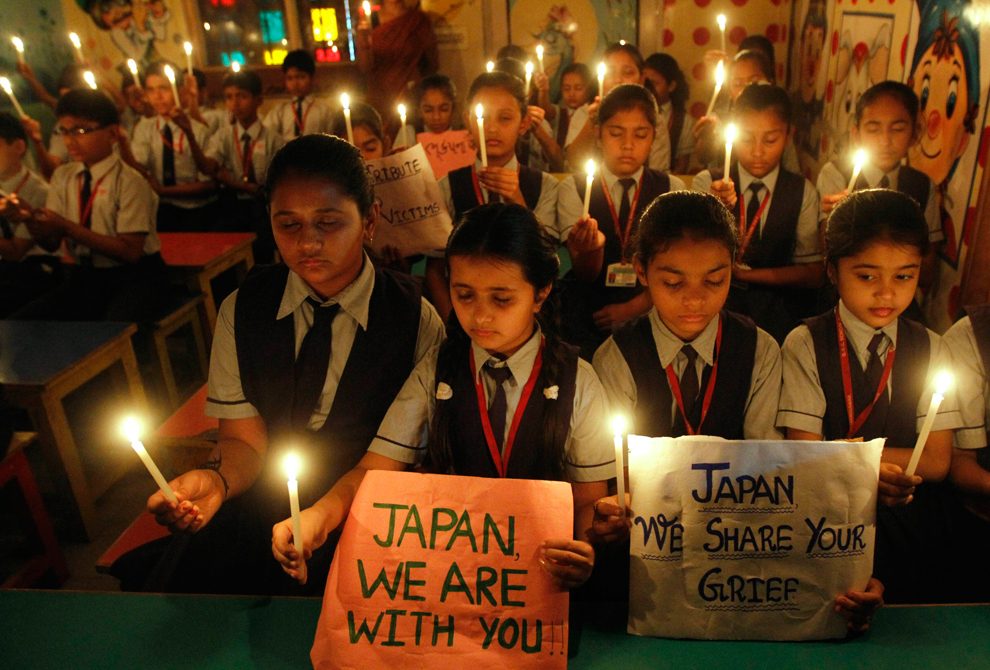 Students hold candles as they pray for Japan's earthquake victims inside their school in the western Indian city of Ahmedabad March 11. (Amit Dave/Reuters) #
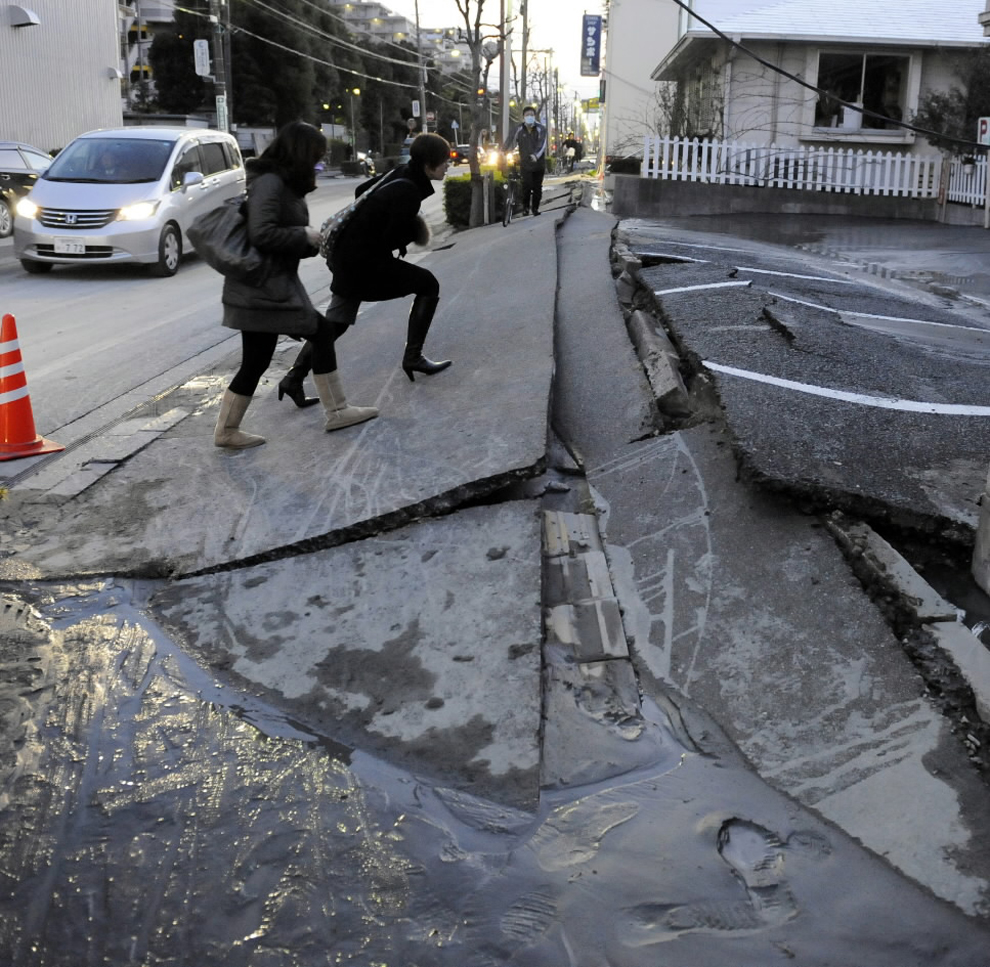 A pedestrian road collapsed in the massive 8.9-magnitude earthquake in Urayasu city, Chiba prefecture on March 11. (Toshifumi Kitamura/AFP/Getty Images) #
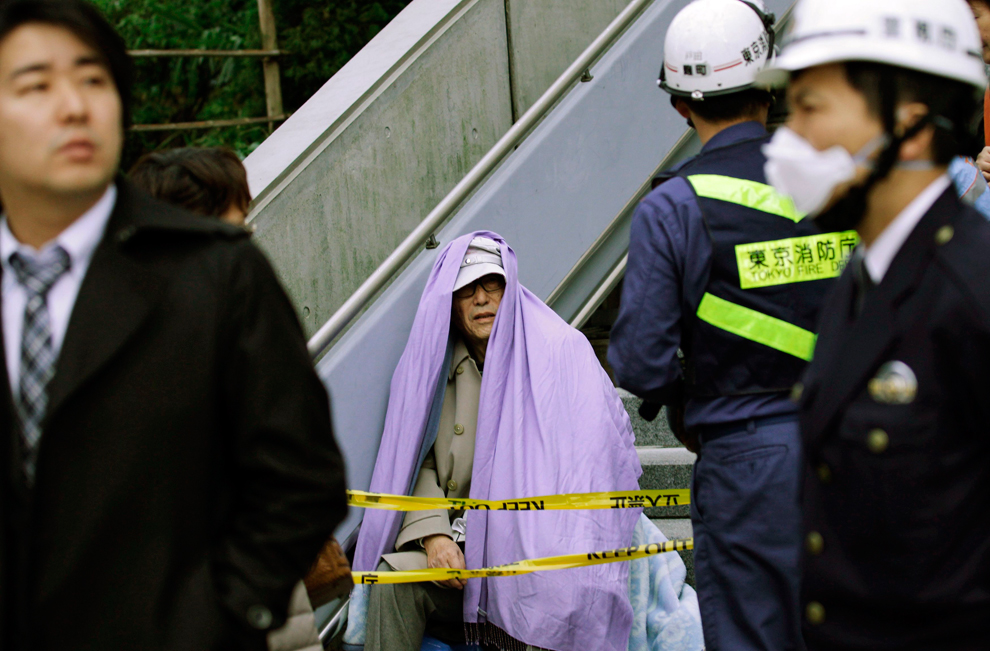 A man sits wrapped in a blanket after he was evacuated from a building in Tokyo's financial district, after an earthquake off the coast of northern Japan, March 11. (Kim Kyung-Hoon/Reuters) #
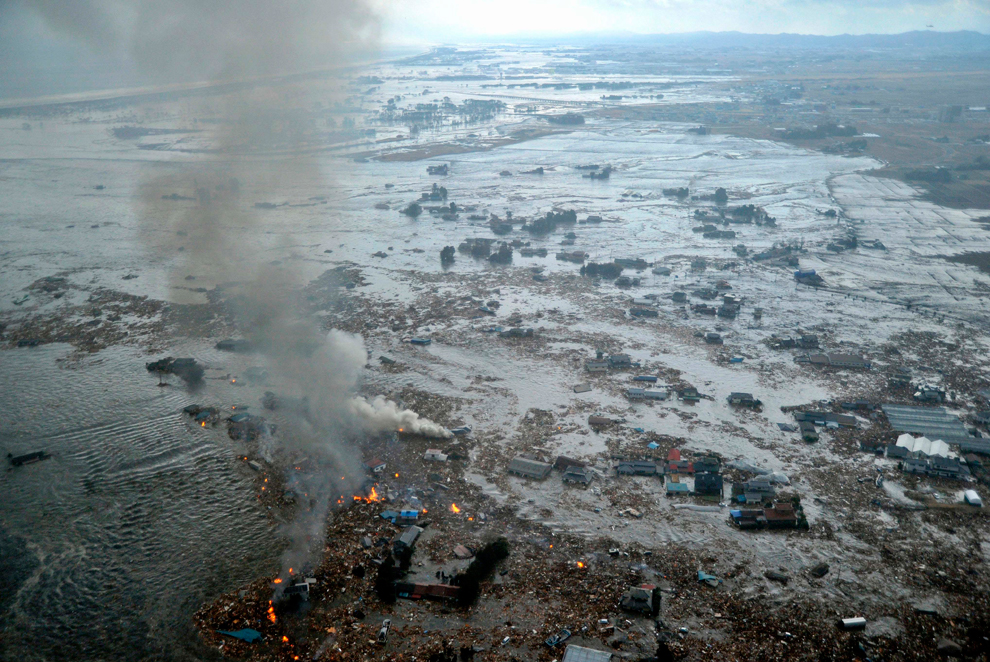 Shores are submerged in Natori city, Miyagi prefecture (state), Japan, after a ferocious tsunami spawned by one of the largest earthquakes ever recorded, slammed Japan's eastern coasts Friday, March 11, 2011. (Kyodo News) #
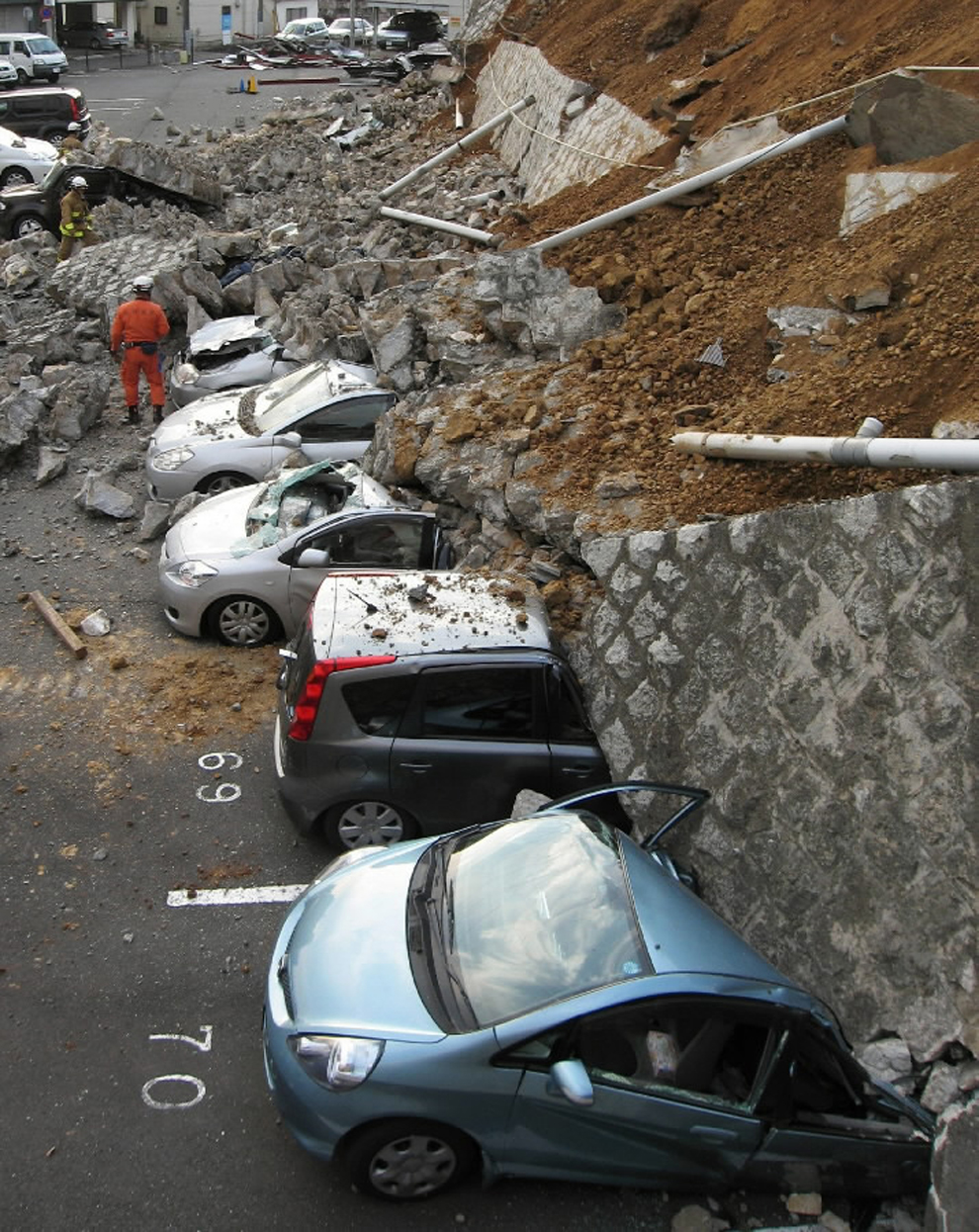 Vehicles are crushed by a collapsed wall at a carpark in Mito city in Ibaraki prefecture on March 11. (Jiji Press/AFP/Getty Images) #
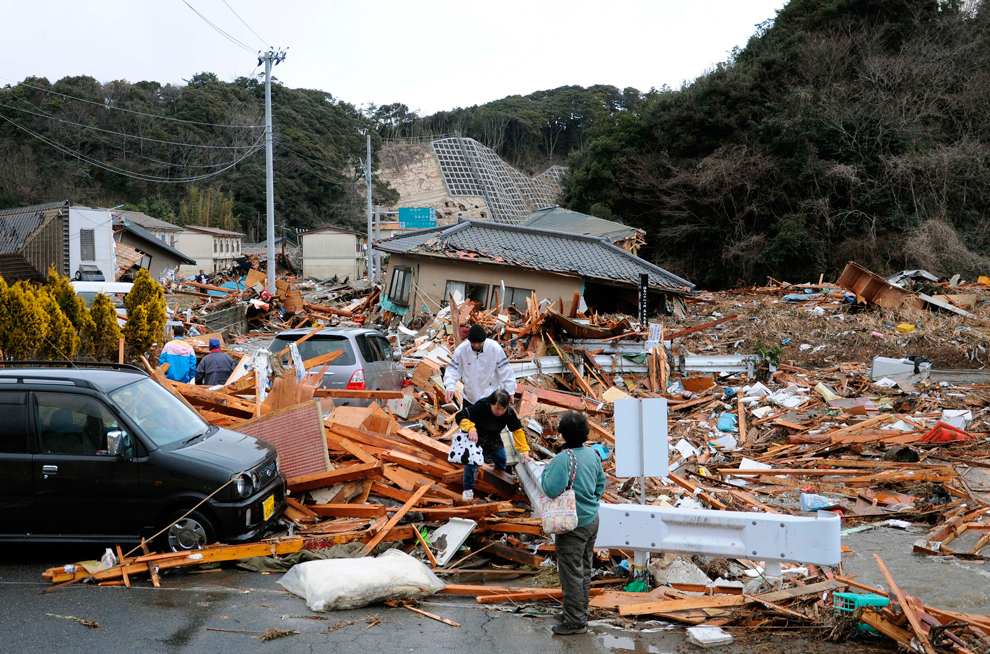 Residents walk through the rubles of residents collapsed by a powerful earthquake in Iwaki, Fukushima prefecture Japan. (Kyodo News/Associated Press) #
 This National Oceanic and Atmospheric Administration (NOAA) image released on March 11, 2011 shows model runs from the Center for Tsunami Research at the NOAA Pacific Marine Environmental Laboratory showing the expected wave heights of the tsunami as it travels across the Pacific basin. The largest wave heights are expected near the earthquake epicenter off Japan. The wave will decrease in height as it travels across the deep Pacific but grow taller as it nears coastal areas. In general, as the energy of the wave decreases with distance, the near shore heights will also decrease (e.g., coastal Hawaii will not expect heights of that encountered in coastal Japan). Tsunami waves rolled thousands of miles across the Pacific Ocean after a massive earthquake off Japan and washed ashore in Hawaii early March 11. (NOAA) #

|