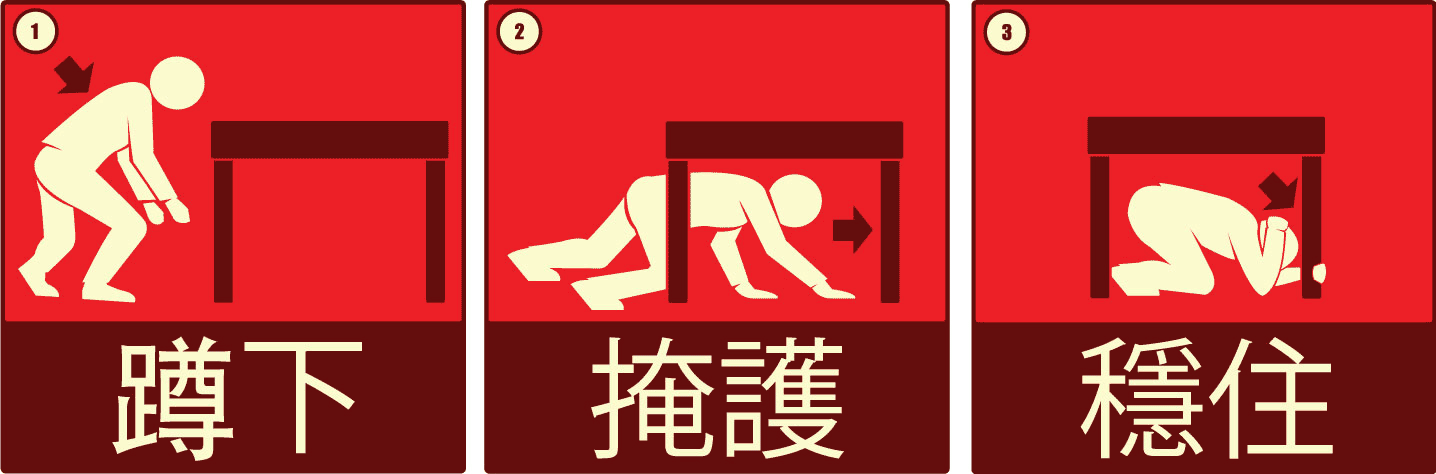
遇到地震时,人的本能反应就是跑到屋外。但美国政府救灾部门和红十字会等机构的专家却建议留在室内,伏倒躲到桌台等坚硬的家具底下,并抓住家具,等震动停止再离开,简称“伏倒、掩护、抓住”(Drop,Cover and Hold on) 。理由是跑的过程中反而很容易被震落的吊灯、玻璃、书柜、电视机、碎石等物体砸伤。每年新学期开始时,美国学校就开始对小学生们进行防火防地震的常识教育和演习。若地震发生时学生正在上课,教师要命令学生们立即躲到桌台下面,并远离窗口,保持躲藏姿势至少一分钟,然后从教室疏散。这三步骤是我的孩子们在接受训练后回家来绘声绘色地告诉我们的,并要家长在家里也一同演习一遍并签字。
* Drop, cover and hold on. Move as little as possible. * If you are in bed, stay there, curl up and hold on. Protect your head with a pillow. * Stay away from windows to avoid being injured by shattered glass. * Stay indoors until the shaking stops and you are sure it is safe to exit. If you must leave the building after the shaking stops, use stairs rather than an elevator in case there are aftershocks, power outages or other damage. * Be aware that fire alarms and sprinkler systems frequently go off in buildings during an earthquake, even if there is no fire.
If you are outside when the shaking starts …
* Find a clear spot and drop to the ground. Stay there until the shaking stops (away from buildings, power lines, trees, streetlights). * If you are in a vehicle, pull over to a clear location and stop. Avoid bridges, overpasses and power lines if possible. Stay inside with your seatbelt fastened until the shaking stops. Then, drive carefully, avoiding bridges and ramps that may have been damaged. * If a power line falls on your vehicle, do not get out. Wait for assistance. * If you are in a mountainous area or near unstable slopes or cliffs, be alert for falling rocks and other debris. Landslides are often triggered by earthquakes.
遇到地震时,人的本能反应就是跑到屋外。但美国政府救灾部门和红十字会等机构的专家却建议留在室内,伏倒躲到桌台等坚硬的家具底下,并抓住家具,等震动停止再离开,简称“伏倒、掩护、抓住”(Drop,Cover and Hold on) 。理由是跑的过程中反而很容易被震落的吊灯、玻璃、书柜、电视机、碎石等物体砸伤。每年新学期开始时,美国学校就开始对小学生们进行防火防地震的常识教育和演习。若地震发生时学生正在上课,教师要命令学生们立即躲到桌台下面,并远离窗口,保持躲藏姿势至少一分钟,然后从教室疏散。这三步骤是我的孩子们在接受训练后回家来绘声绘色地告诉我们的,并要家长在家里也一同演习一遍并签字。
* Drop, cover and hold on. Move as little as possible. * If you are in bed, stay there, curl up and hold on. Protect your head with a pillow. * Stay away from windows to avoid being injured by shattered glass. * Stay indoors until the shaking stops and you are sure it is safe to exit. If you must leave the building after the shaking stops, use stairs rather than an elevator in case there are aftershocks, power outages or other damage. * Be aware that fire alarms and sprinkler systems frequently go off in buildings during an earthquake, even if there is no fire.
If you are outside when the shaking starts …
* Find a clear spot and drop to the ground. Stay there until the shaking stops (away from buildings, power lines, trees, streetlights). * If you are in a vehicle, pull over to a clear location and stop. Avoid bridges, overpasses and power lines if possible. Stay inside with your seatbelt fastened until the shaking stops. Then, drive carefully, avoiding bridges and ramps that may have been damaged. * If a power line falls on your vehicle, do not get out. Wait for assistance. * If you are in a mountainous area or near unstable slopes or cliffs, be alert for falling rocks and other debris. Landslides are often triggered by earthquakes.