啥叫线性思维?就是把过去的经历画一条直线无限延伸到未来,可现实不是那么玩儿的,儿童时的宝贝会变成少年时的垃圾
过去三十年对美国社会最有影响的就是由联储会的一低再低的利率政策吹大的金融泡沫、债务泡沫,美国的房价只不过是其中的症状之一。如果俺赶上了那个好时机,那是俺的狗屎运,俺可不敢说俺有多聪明、自以为找到了财富的源泉,更没脸去教别人咋赚钱
要说运气,过去二、三十年跟上利率快车的可比房子通胀前的4%赚得多多了,那时俺银行CD的利息都超过10%,要是债券还要加上增值,更不必整天跟社会渣滓打交道
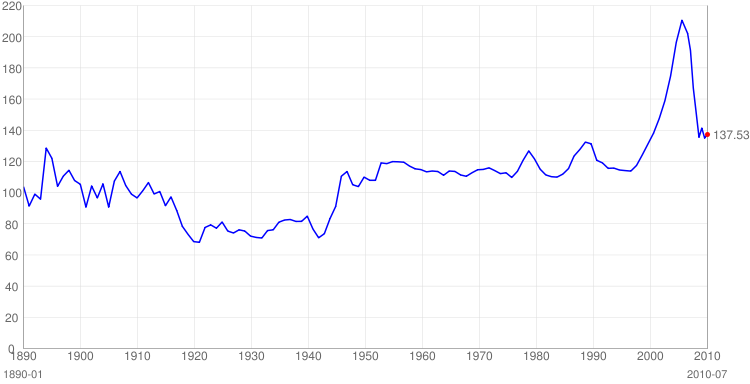
仔细瞧瞧十年利率吧,未来十几、二十年是该升还是该降?为啥2006年房市崩了?利率涨起来了呗,而且就涨了那么一点。连房价到底为嘛涨、为嘛跌都不了还搞啥房地产?
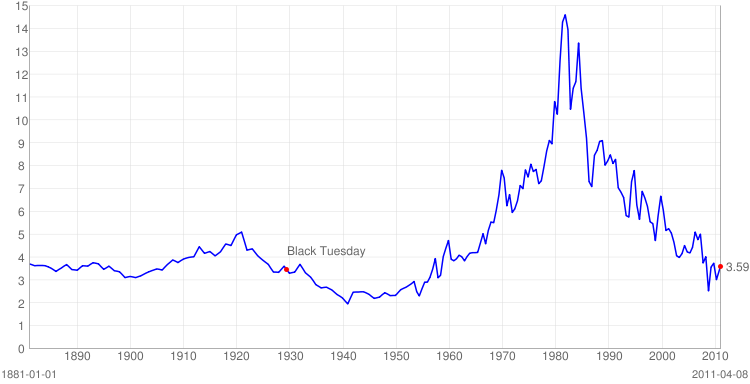
真实房价
Americans Shun Cheapest Homes in 40 Years as Owning Loses Appeal
bloomberg
By Kathleen M. Howley - Apr 18, 2011
The most affordable real estate in a generation is failing to lure buyers as Americans sour on the idea of home ownership. Photographer: Matthew Staver/Bloomberg
Victoria Pauli signed a one-year lease last week to stay in her rental home in Fair Oaks, California. She had considered buying in the area, where property prices have slumped 57 percent since a 2005 peak.
In the end, she decided it wasn’t worth it.
“I know people who have watched their home values get cut in half, and I know people who are losing their homes,” said Pauli, 31, who works as a property manager for a real estate company. “It’s part of the American dream to want to own your own home, and I used to feel that way, but now I tell myself: Be careful what you wish for.”
The most affordable real estate in a generation is failing to lure buyers as Americans like Pauli sour on the idea of home ownership. At the end of 2010, the fourth year of the housing collapse, the share of people who said a home was a safe investment dropped to 64 percent from 70 percent in the first quarter. The December figure was the lowest in a survey that goes back to 2003, when it was 83 percent.
“The magnitude of the housing crash caused permanent changes in the way some people view home ownership,” said Michael Lea, a finance professor at San Diego State University. “Even as the economy improves, there are some who will never buy a home because their confidence in real estate is gone.”
Worse Than Depression
Historically, homes have been a safer investment than equities. During 2008, the worst year of the housing crisis, the median U.S. home price declined 15 percent, compared with a more than 38 percent plunge in the Standard & Poor’s 500 Index.
Americans stay in their homes for a median of eight years, according to the National Association of Realtors in Chicago. Someone who bought a home in 2002 and sold in 2010 saw a 4.8 percent increase in value, based on the annualized median price measured by the group. The average annual gain in the past 20 years was 4.2 percent.
Falling prices have made real estate the best buy in at least four decades. Housing affordability reached a record in December, according to National Association of Realtors data that go back to 1970. The group bases its gauge on property prices, mortgage rates and the median U.S. income.
The median U.S. home price tumbled 32 percent from a 2006 peak to a nine-year low in February, data from the Realtors show. The retreat surpassed the 27 percent drop seen in the first five years of the Great Depression, according to Stan Humphries, chief economist of Zillow Inc., a Seattle-based real estate information company.
Not Risk-Free
“If we’ve learned anything from this mess, it’s that housing is not a risk-free investment,” said Michelle Meyer, a senior economist at Bank of America Merrill Lynch Global Research in New York. “Everyone knows someone underwater in their mortgage or struggling to sell a home.”
About 11 million U.S. homes were worth less than their mortgages at the end of 2010, according to CoreLogic Inc., a Santa Ana, California-based real estate information company. An additional 2.4 million borrowers had less than five percent equity, meaning they’ll be underwater with even slight price declines, according to the March 8 report. The two categories add up to 28 percent of residences with mortgages.
The share of Americans who said they plan to purchase a home in the next six months tumbled 23 percent in March, according to the Conference Board research firm in New York. The National Association of Realtors probably will say tomorrow that existing-home sales were at a 5 million annual rate in March, up 2.5 percent after a 9.6 percent plunge in February, according to the median estimate of 74 economists surveyed by Bloomberg.
Improving Employment
The drop in confidence may be temporary. Home sales probably will rise 4.1 percent to 5.1 million in 2011, with the biggest increases in the second half of the year, the Mortgage Bankers Association said in an April 14 report. In 2012, sales may climb 5.9 percent to 5.4 million, the highest pace since 2007, the Washington-based trade group estimated.
A rebound in home sales depends on the availability of jobs, the mortgage association said. The unemployment rate probably will decline every quarter of this year and next, falling to 7.9 percent by 2012’s end, the trade group said. It was 8.8 percent last month, the lowest in two years.
“We expect that purchase activity will pick up slowly as the improvement in the job market eventually leads to greater willingness to buy,” the mortgage bankers group said.
Low Mortgage Rates
Borrowing costs are at historic lows. The average U.S. rate for a 30-year fixed mortgage was 4.69 percent last year, the lowest in annual data going back to 1972, according to mortgage financier Freddie Mac, based in McLean, Virginia. The rate in March was 4.84 percent, the company said.
By 2012’s fourth quarter, the average fixed rate may rise to 6 percent, according to the Mortgage Bankers Association.
“If you can jump through the hoops to get a mortgage, and there will be hoops, then this is an amazing time to purchase real estate,” said Robert Stein, a senior economist at First Trust Portfolios LP in Wheaton, Illinois, and the former head of the Treasury Department’s Office of Economic Policy. “There are going to be a lot of people kicking themselves a few years from now because they didn’t take advantage of the low prices and the low mortgage rates.”
Cheap financing hasn’t done enough to boost home sales in part because lenders are being more selective with applicants, according to Federal Reserve Chairman Ben Bernanke. Fed policy makers have described the housing market as “depressed” in statements following their last eight meetings.
Tighter Lending
“Although mortgage rates are low and house prices have reached more affordable levels, many potential homebuyers are still finding mortgages difficult to obtain and remain concerned about possible further declines in home values,” Bernanke said in Congressional testimony last month.
The share of banks reporting tighter mortgage standards in the first quarter rose to 16 percent, the highest since 1991, according to the Fed’s Senior Loan Officer Survey.
Federal regulators are proposing rules that may make lending even more stringent, including a requirement that banks and bond issuers keep a stake in home loans they securitize if the mortgage borrowers have imperfect credit and down payments of less than 20 percent. Borrowers who don’t meet the criteria would pay higher rates to compensate lenders for risk.
As mortgage requirements rise, rates could follow as Congress and the Obama administration consider phasing out government-controlled Fannie Mae and Freddie Mac. The companies hold federal charters mandating they increase the availability of mortgages through securitization. In Fannie Mae’s case, that order goes back to the Great Depression, when it was created as part of President Franklin D. Roosevelt’s New Deal.
Unsettled Issues
“There are a lot of unsettled policy issues on the table right now that, if they’re not handled right, could further set back the housing market,” said Richard DeKaser, an economist at Parthenon Group in Boston. “Fannie and Freddie have historically lowered interest rates, and eliminating them will increase the cost of home ownership.”
The U.S. home ownership rate dropped to 66.5 percent in the fourth quarter, the lowest in more than a decade, according to the Census Department. The rate probably will retreat another percentage point by 2013, according to Meyer, of Bank of America Merrill Lynch, and Lea, the finance professor. That would put it back to a 1997 level.
“People will still aspire to own their own homes,” Lea said. “They’ll just be a lot more practical about it.”
Pauli, the California renter, said she has no such aspirations, at least for now. She pays $1,500 a month for her three-bedroom, single-family home with a two-car garage, granite kitchen countertops and stainless-steel appliances. Her neighbors who bought before the housing crash typically have mortgage payments of about $2,800 a month, Pauli said.
“I don’t see myself purchasing, even with all the great prices I see,” Pauli said. “Going to bed every night worrying about your home value doesn’t sound like a good time to me.”
http://www.bloomberg.com/news/2011-04-19/americans-shun-most-affordable-homes-in-generation-as-owning-loses-appeal.html
海归了,才知道国内交通环境是多么的危险恶劣,
很多国人司机是多么的缺德!
来源: jjaass12345 于 2011-04-19
海归了,才知道国内交通环境是多么的危险恶劣,很多国人司机是多么的缺德!
回国2年多,自己在北京、天津、江苏、无锡、上海开过车,真正是体会了国内开车环境的是那么的危险,恐惧,深深地感受到了国内许多司机的道德败坏、自私、和对他人交通安全的无视。先说些自己经历的几个危险状况:
1.一天在北京东二环开车,自己在中间道上走非常正常,前面车速慢了,我开始减速,在离前面的车有约2个车身时,突然一个破面包金杯车从右面快速往里面钻,我不得不突然来个急刹车,好险!后来这样的事我碰到好几起,都是在距离不多的情况下从两边快速往里。
2.在北京的高速环线上走,经常有些动力好点车在贴你的车约一尺多点做蛇形在车群中快速超车快奔,如果自己稍微方向一松,就是交通事故。
3.在你过绿灯的路口时,你经常遇到对面的左转车会不停、不观望自己对面车的情况下会突然左转或U形掉头,你如果按你的路权不紧急减速,肯定是交通事故。
4.在高速上,你好常常看到国内的那些超高、超重、超宽、动力还不好的重卡,一路占作左中右3个道,一边吃力慢慢地开作,上面的司机还在起劲地聊大天。你说他妈的缺德不缺德?小车只能从外道边上很危险地超过去。
5.你会在通过有自己路权的路口时,常常遇到你右手方路上,或就是一个小便道上来的车不会停、不会观望、甚至连停都不停就一直作他们的右转。遇到这样的事,你还是得来个紧急刹车,或做紧急躲避。在小城市,这些乱开车的事更是突出,有时真是让感到恐惧和后怕。
6.还有就是那些开大卡车的,在中国素质、道德是最坏最低下的这帮人,开车从来就不会知道什么是安全行驶,从来就是自以为是地开车,什么路权、路况安全观望、停缓、什么交通标志,对他们都是天文符号,他们就认为有路车能上道,他就能开过去。闯红灯是家常便饭,出了事故,自己狗屁钱没有,还在那里当傻子。就是这些人给许多他人制造了大量的交通事故,也就是他们出的事故占了中国交通事故的85%。
7.你会经常遇到那些为了自己省事、少走路左转,就逆行开车、骑自行车、或开电动车。
晚上尤其可怕。
8.你在主路开车,经常会遇到从辅路上突然快速杀进一辆小汽车、大卡车、公交车、自行车、电动车、摩托车、甚至行人。
说实际的,他们这些人开车和那些他们同样素质低下的对碰撞了,死人了我还真不当回事,就怕他们这样乱开车去祸害社会的精英,这样的事情多了,国家的损失可就大了。这些事,国家还是要好好地对这些人要好好做法制治理呀!!
可是也就怪了,可交通管理和法制机构对他们的交通违法,或事故后惩罚还不很重。这也说明了中国法制对于违法成本的要求是太低了,出事了,对于这些低素质人的惩罚还是不痛不痒,也再次说明在中国有真正的合格法制社会管理吗?
于北京
wenxuecity