





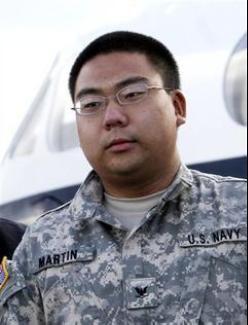
图2:美海軍情報專家馬丁(Bryan Minkyu Martin)
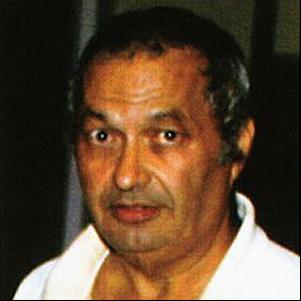
图3:B-2轟炸機印度裔工程師高瓦迪亚(Noshir Gowadia)
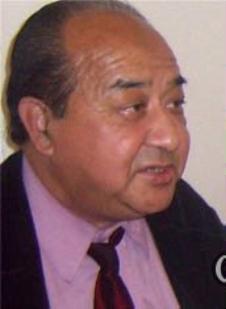
图4:巴布爾・梅蘇特(Babur Mehsut)
中共越来越强的政治野心及軍方的强硬势力的膨胀,造成其間諜活動在全球的急速擴张。引發以美國爲首的西方盟國的高度警惕,隨着反恐战爭的勝利,美國開始正視中共對西方社會的侵蚀,中美間諜战逐步浮出水面。
隨 着中國經濟的長足進步,國力日益增强。胡錦濤、温家寶执政的最後五年,中國軍方势力不斷增强,少壮鷹派逐漸占據軍方主流,國防預算不斷增加,隨之中共秘密 經費也大幅度增加。根據美國情報系统調查及預估,中國軍方有關情報系统的秘密經費在近十年中增加了近二十倍。而日本及台灣情報系统認爲增加的幅度超過了四 十倍,已經達到了驚人的程度。
2011年初始,美國政府在一周內就公布了三起中國間諜案,隨後再公布二起間諜案。半年之內累計公布的中國間諜案已經達到了五起之多。三年內總共抓捕五十七名中共間諜,其中二名在逃,九名正處于審判階段,其余的四十六人全部被判處罪名成立,正在美國監獄服刑。
今年審判的四起中國間諜案,令美國政府震驚的是,中國情報機構已經從傳统的發展華人間諜方式,轉移到了發展吸收美國出生的美國公民的新方式。在這五起間諜案中非華裔的中國間諜已經超過了一半的比例。
案 件一。28歲的美國公民格倫・達菲・施莱佛是一名出生在美國的道地美國公民。施莱佛在中國上海讀書期間被中共軍方情報部門發展爲"准間諜", 施莱佛回到美國之後,隱瞞其在中國的經曆,多次爭取在加入美國情報機構CIA,並試图谋得职位,以便將機密情報提供給中國。最终在CIA長達一年多时間的 背景調查中被识破,施莱佛被迫坦白其接受中共情報機構金錢,並試图進入CIA成爲中共情報機構的臥底。
案 件二。5月19日,出生于美國紐约市,在北卡羅莱那州布雷格堡海軍基地服役的一名美國海軍情報專家,馬丁(Bryan Minkyu Martin)向法庭認罪,承認他曾試图向一名他自認爲是"中國情報人员"的人出售了機密文件。他曾向一名做秘密工作的聯邦調查局人员出售了一批高度機密 文件、照片和图像,並獲得對方支付的11000美元回報。他的工作與美軍在阿富汗的行動有關,主要是爲美國海軍陆战隊及美國著名的特種部隊海豹特遣隊提供 情報分析。
案件三。B-2轟炸機印度裔工程師高瓦迪亚(Noshir Gowadia),因與中國合作研發巡弋飛彈主要零件,出售敏感軍事科技給中國,被夏威夷聯邦法院判處32年刑期。
正 在美國FBI等部門聯合調查但尚未正式公布的案件尚有十多起,其中一起引起了美國及其西方盟國的高度重視,二名以英國身份及英國企业駐美分公司的名義留駐 美國並在美國獲得合法綠卡的中國"夫婦"涉嫌在美國從事間諜活動,今年初,出生于上海的中國男性間諜嫌疑人X先生被美國情報機構逮捕,不准保釋。女性嫌疑 人出售名下企业、汽車等资産後潜逃,但美國情報機構仍監測到中共情報機構二次辗轉彙出的超過一百萬美元經費及指令其務必救出"丈夫"的指令。其中被這對 "夫婦"雇佣的涉嫌充当杀手,並身負多起華裔離奇命案的代號"魔術"的越華裔杀手也離奇潜逃。
這 起正在進行深入調查的中國間諜案不僅涉及杀人案,而且涉及多起中國間諜走私美國軍用電子芯片,這些電子芯片全部用于洲際導彈,走私路線涉及英國、台灣、日 本等地,根據美國情報系统顯示,這起間諜案涉及由中國駐美及駐英外交機構軍事武官的直接指揮。更爲严重的一點是,這起涉及多重命案的間諜案顯示中共軍方情 報系统已經改變了原来的不杀人的原則,而是采取了更多的超限战手法,並將杀人作爲其中一種可以采納的手段。
另一方面,美國情報系统發現,中國情報系统越来越依赖金錢来獲取美國核心技術情報。並 通過更多的技術合作及獲取美國核心技術情報。在一起正在調查的案件中顯示,中國軍方通過资金轉移,設立一家企业,然後以150億人民幣(约23億美元)的 合约誘使美國某著名航空研究機構外包中國航空控制系统的研究。在這個研究項目中,中方聲稱是用于民航飛機的機艙控制總成系统,但实際上在其中很多技術上, 中方要求的則是美國最先進的战鬥機機艙控制總成的核心技術。同时以技術會谈及邀請訪问中國等方式誘騙美國技術專家泄密,從而進一步成爲中國間諜。
在美國宣布不斷破獲中國間諜案的同时,德國、法國、瑞典、印度、日本、台灣、加拿大都宣布破獲了中共間諜案。
德國聯邦憲法保卫局對外界宣布:自2005年以来,中國一直對德國企业進行秘密間諜活動,在德的60%工业間諜爲中國人。
2011年初,德國聯邦檢察官指控一名中國籍維族男子爲中國刺探流亡海外維族人的情報。 這名45歲的男子在2005到2009年之間,向中國安全当局提供有關維族流亡者准備舉行的抗議等活動的消息。
法 國情報檔案顯示,中國商业間諜竊取外國機構的商业機密,使出美人計和安插間諜作实习生,設局引目標上钩。法國政府正爲國內企业制訂指引,以防墮入中國間諜 的美人計陷阱。法國一間大藥廠的首席研究员以爲飛来豔福,跟一名中國女孩上床,被對方偷拍做愛過程也懵然不知。翌日在酒店房內看到录影片段,惟有乖乖就 范。
在另一個案,一家法國企业接待了一批中國代表团後,發現有專利液體樣本不翼而飛。之後證实是一名中國代表团成员用領帶吸走了液體,回國��。有保安專家警告,法國企业还應該小心 30,000名在当地实习的中國學生。
法國情報部門还在調查法國雷诺車廠( Renault)三名高層涉嫌將公司商业秘密售予一間中國企业。
印 度政府在年初的时候宣稱抓捕到三名中國間諜:2011年1月17日晚,印度政府逮捕了非法越境的三名中國公民,這三中國人两男一女,来自中國上海,均聲稱 爲中國華爲公司的雇员,他們越境進入印度境內,三人均没有有效的印度簽證。但奇怪的是,這三人中的一人持有伪造的只發給印度公民的印度税務文件。
姆斯敦基金會:台灣間諜案顯示出中國諜報工作的變化——台灣羅
Taiwan Espionage Cases Highlight Changes in Chinese Intelligence Operations

Major General Lo Hsien-chi
On June 13th, Taiwanese authorities detained businessman Lai Kun-chieh on charges that he spied for Beijing, attempting to steal military secrets for a still unidentified Chinese intelligence agency (Lianhe Xinwen, June 14). The case follows the standard plotline of most Chinese intelligence operations against Taiwan that has emerged since 1949. That is, Chinese intelligence recruiting Taiwanese businessmen or retired officials living in China to “run against” the Taiwanese government and military.
The allegations against Lai should draw attention back to the anomalous case of General Lo Hsien-chi, who was detained at the end of January. Lo’s case drew widespread attention because Lo was the highest ranking Taiwanese official since a vice defense minister in the 1960s to face espionage charges (BBC, May 20). More importantly, however, the case should have drawn more attention for its departure from China’s normal operations against Taiwan (and arguably any other country). Beijing handled this case entirely outside of China, demonstrating greater willingness to accept operational risks and suggesting the normal pattern of Chinese intelligence operations may be changing.
Details of the Lai Allegations
According to Taiwanese authorities, Lai was working for Lenovo in Beijing when Chinese intelligence approached him last year through an intelligence officer under cover with the Beijing municipal government. Through Lai’s work, he came in contact with “Li Xu,” who ostensibly worked as the deputy director of the Beijing Office of Taiwan Affairs. Lai claimed Li told him that if he failed to cooperate in collecting intelligence Beijing would not allow him to remain in China, but it is unclear whether any coercion was applied (Epoch Times, June 14; Lianhe Xinwen, June 14).
hinese intelligence tasked Lai to acquire Taiwanese military secrets, even though he lacked any known military connections and was not a retired military serviceman. Specifically, Li tasked Lai for information on U.S.-supplied Patriot Missiles and the annual Han Kuang exercises (Lianhe Xinwen, June 14).
One of the Taiwanese military officers approached by Lai alerted investigators to Lai’s efforts to gain access to military secrets, prompting an immediate investigation. This element adds credence to the denials of Taiwanese defense officials that an additional investigation has started to identify potential accomplices from whom Lai gained access to information on the Patriot Missile and Han Kuang exercises (The Associated Press, June 13).
Given Lai’s telecommunications background with Motorola, an interesting omission in the Chinese intelligence tasks—at least according to the information currently available—was the Taiwanese military’s architecture for command, control, communications, computers, intelligence, surveillance, and reconnaissance (C4ISR). Taiwan’s C4ISR program, Po Sheng, developed with the support of the United States, has been the target of Chinese intelligence, including in the cases of General Lo and US Defense Security Cooperation Agency official Gregg Bergersen (China Times [Taiwan], February 9) [1]. How and why intelligence services determine what their agents should collect is difficult to understand, and so is the reported absence of Po Sheng from Lai’s tasking. The absence of Po Sheng could indicate China already has collected sufficient information about the program and the technology to meet their needs, contravening the superficial damage suggested by Taiwanese and US authorities commenting on these past cases.
Structural Dynamics of the China-Taiwan Intelligence Contest
The Chinese intelligence services have attempted to collect intelligence from Taiwan since the end of the Chinese Civil War in 1949. Until 2008, the basic structure of the intelligence contest remained the same with only a few variations at the beginning of the Reform Era in 1979. Prior to China’s opening, both sides’ intelligence services rarely could directly access each other’s territory, forcing much of the intelligence contest onto more neutral ground. Known as the “Vienna of the East,” Hong Kong was a hotbed of intelligence activities against China, because few Chinese citizens could travel further afield than the British colony and foreigners rarely could enter China. Taiwan did not welcome Chinese citizens except as defectors [2]. Hong Kong thus became the focal point for the China-Taiwan intelligence contest with intelligence services from both sides recruiting non-government individuals to act as principal agents inside China and Taiwan.
China’s opening in 1979 marked the first change to this competition, allowing more foreign access. Taiwanese intelligence exploited this opening to start recruiting and running human agents with intelligence officers based inside China. The new dynamics would become a significant driver for the creation of the Ministry of State Security to unify Chinese counterespionage in 1983 (Xinhua News Agency, June 20, 1983).
With more Taiwanese citizens living and working in China, Hong Kong became less significant to both sides. Taiwanese intelligence officers could find and exploit sources in China; Chinese intelligence could more easily draw from a larger pool of Taiwanese without risk of monitoring by the Special Branch of the Royal Hong Kong Police Force. Yet, Chinese intelligence still had to rely on a principal agent with indirect or secondhand access to Taiwanese government and military secrets.
As a consequence of this constraint, Chinese intelligence operations against Taiwan developed a basic operational pattern. Chinese intelligence would monitor and approach a Taiwanese businessman, first in Hong Kong and later in China, who regularly traveled back to Taiwan. Although the record in Hong Kong is less clear, Chinese intelligence within China would threaten, implicitly or explicitly, the Taiwanese businessman’s livelihood and offer spying as a way out (BBC News, August 16, 2010). Chinese incentives ranged from cash payments to observable benefits, like reduced business fees and customs charges. The recruited businessman, if cooperative, would then attempt to recruit or elicit intelligence from contacts or friends in the Taiwanese government or military, usually with financial support from the Chinese intelligence services. This explains why the Taiwanese Ministry of Justice’s Investigation Bureau arrests two or more individuals in almost every Chinese espionage case.
This pattern of Chinese espionage suggests that the intelligence services rely heavily on their powers of investigation to identify potential agents. The State Security Law, for example, mandates citizens to cooperate with Chinese security officials, giving them ready access to hotels and residences. The intelligence services also can exploit a person-of-interest’s computer, cell phone, and any other personal electronic devices, harvesting that person’s contacts and correspondence for background information (State Security Law of the People’s Republic of China, available on china.org.cn).
The table below summarizes several recent Taiwanese espionage cases and how Chinese intelligence approached the operation, illustrating the pattern described above.
Select Chinese Espionage Cases Against Taiwan (2004-11) | ||||
Name | Case Officer and Recruitment Location | Incentives Used | Agent’s Access to Information | Type of Intelligence Collected |
Chen Chih-kau | Inside China | Cash & Coercion | Retired | Counterintelligence (CI) |
"Ho Ping" | Inside China | Cash | Second-Hand | Military |
Tseng Chao-wen | Inside China | Cash | Retired | CI & Military |
Huang Cheng-an | Inside China | Cash | Natural / Direct | Military Science |
Hsu His-cheh | Inside China | Cash | Retired | Military Science |
Lo Hsien-che | Third Country | Cash & Coercion | Natural / Direct | Military |
Chen Pin-jen | Inside China | Cash | Second-Hand | Political |
Ho Chi-chiang | Inside China | Cash & Coercion | Second-Hand | CI & Military |
Liao Hsien-ping | Inside China | Cash | Retired | Stability & Politics |
Sources: China Post, Taiwanese Central News Agency, China Times [Taiwan], South China Morning Post, BBC, and Taipei Times. | ||||
The Exceptional Case of General Lo
The Chinese recruitment and handling of General Lo Hsien-chi, director of Army telecommunications and electronic information, represented a departure from the pattern outlined above. While Chinese recruitment incentives were typical—cash and coercion—the investment, setup and execution of the operation looked like a traditional Western or Russian recruitment case.
The basic methods of the Chinese recruitment were similar to the typical mix of both coercion and incentive used to recruit Taiwanese spies. To engineer the recruitment, the Chinese intelligence officer set up a sexual encounter to generate blackmail material. Once coercion was possible, the officer then reportedly approached Lo, highlighting Lo’s potential problem and offering him up to hundreds of thousands of dollars to spy (Taipei Times, February 10).
In contrast to the pattern, a Chinese intelligence officer posted overseas recruited Lo, while he was stationed in Bangkok, Thailand as a military attaché between 2002 and 2005. Additionally, the blackmail attempt suggests China also established a larger operational infrastructure in Thailand than the presence of a commercially-covered intelligence officer might indicate. The legitimate Australian papers possessed by the Chinese intelligence officer indicate China is willing to devote substantial time and resources to developing the cover of its intelligence officers. Acquiring the papers also makes it easier for the officer to move around, opening operational opportunities in countries like the United States, Singapore, United Kingdom, Japan and others that allow Australian citizens to enter freely for short time periods (China Times [Taiwan], February 9; Taipei Times, February 10).
More interestingly, the Lo case is one of three publicly-known Chinese operations to unfold entirely outside of China—all of which have come to light in the last three years [3]. The other two involved Chinese intelligence officers covered as diplomats or journalists posted in Germany and Sweden, pursuing dissident targets (The Local [Sweden], December 15, 2009; Epoch Times, June 13).
Conclusions
The traditional U.S. interpretation of cases like Lai Kun-chieh’s is to see Chinese intelligence as amateurish and undirected [4]. Yet, as the table above showed, Chinese intelligence has successfully made use of such amateur agents to collect valuable intelligence. U.S. observers have confused them for poorly-trained case officers, fumbling to collect intelligence. This is largely because Lai and others like him perform a role usually reserved for professional intelligence officers. Apart from this obvious limitation, this kind of relationship allows Chinese intelligence officers to remain in the background and shields the intelligence relationship behind the agent’s normal travel to China.
The exceptional case of General Lo and the other two overseas cases in Germany and Sweden add weight to the suggestion that Chinese intelligence may be evolving to pursue foreign targets outside China. By posting officers abroad, the Chinese intelligence services potentially gain access to information that would be unavailable otherwise. The normal pattern of Chinese operations, at least against Taiwan, limits Chinese sources to those who already have a connection to China. Yet, such sources also are unlikely going to be able to comment authoritatively on issues not directly related to China, e.g. U.S. policy in the Middle East or Taiwanese policy in Latin America. These cases serve as another potential data point along with Geng Huichang’s appointment as MSS Chief in 2007, which suggest that the intelligence services are becoming more involved in Chinese foreign affairs. (For a more thorough analysis, see “Assessing the Foreign Policy Influence of the Ministry of State Security,” China Brief, Vol. 11, No. 1, January 14, 2011)
In the final analysis, the Lai case indicates that counterintelligence services will need to respect China’s continuing efforts to exploit foreign nationals living or doing business there for intelligence purposes. The spate of Chinese espionage cases in the United States also followed similar lines to the pattern of operations against Taiwan, including the most recent case of Glenn Duffie Shriver (“Espionage Case Highlights Traditional Chinese Espionage,” China Brief, Vol. 10, No. 22, November 5, 2010). Whatever changes may be underway in the intelligence services’ role in foreign affairs, monitoring foreigners inside China will continue to create opportunities for Chinese intelligence. Most MSS personnel work in provincial and municipal-level bureaus to support local counterintelligence and investigations [5]. Any change would require dramatic reform, indicating that domestically-based operations will continue to play an important role in the overall mix of Chinese intelligence operations for years to come, even if cases like General Lo’s become more common.
Notes:
[1] United States v. Tai Shen Kuo, Gregg William Bergersen, and Yu Xin Kang, Affidavit before the US District Court for the Eastern District of Virginia (2008).
[2] Steve Tsang, “Zhou Enlai: The ‘Kashmir Princess’ Incident of 1955,” The China Quarterly 139 (Sept. 1994), 782; James Lilley with Jeffrey Lilley, China Hands: Nine Decades of Adventure, Espionage, and Diplomacy in Asia (New York: Public Affairs, 2004), 84–85, 136–137.
[3] Sharp observers could point to the efforts of Chinese defense attaché Hou Desheng to acquire U.S. cryptological secrets in 1987 as a fourth case; however, the nature of the case suggests opportunism rather than a deliberate effort to acquire intelligence abroad clandestinely. US counterintelligence set up Hou in a sting operation, offering to sell “secrets” to see if Hou would bite (Los Angeles Times, December 31, 1987).
[4] David Wise, Tiger Trap: America’s Secret Spy War With China (New York: Houghton Mifflin Harcourt Publishing Company, 2011), 5–19.
[5] This judgment is based on the expansion of the MSS from a central ministry with few provincial elements to a nation-wide ministry with elements in every province and many local-level state security departments and bureaus. For a brief history of this expansion under Minister Jia Chunwang, see “Assessing the Foreign Policy Influence of the Ministry of State Security,” China Brief, Vol. 11, No. 1, January 14, 2011.


 適合打印版本

